


Vaccines: How They Protect Us
Although vaccination has been a hot topic in recent news, the study of vaccination goes back to around 1,000 years ago. Early records of smallpox immunization, called variolation, can be dated back to 1000 CE in China.
Variolation was a practice that involved taking material (usually part of a scab) from a patient that was infected with smallpox and exposing a healthy individual to this material. The doctor would often insert the infected material underneath the healthy person’s skin to achieve proper exposure. The hope was that the healthy person would get sick, their immune system would successfully fight the virus, and they would then be immune to the disease once they recovered. Not surprisingly, some patients died from an intentional infection of smallpox, but the ones that did survive were indeed immune to future infections.
RF and RM Images of Viruses and Vaccines
Luckily, we have since discovered a less risky immunization method, but the general concept is similar. The body is exposed to the germs of a virus to elicit an immune response, which is a fight from the immune system to attack the organisms, kill them, and protect the body from being infected. If the body is exposed later on to the same virus in its active form, the immune system recognizes it and knows how to fight it off. But instead of using full-force, potent forms of the virus, we now use killed or weakened germs from a virus to provoke an immune response.
Physicians use attenuated (weakened or altered) forms of the virus because they signal the immune system to learn how to fight the disease without hurting the body. The ‘germs’ they use in the vaccination are samples of microbes or proteins that make up the virus.
Through all of the research and discoveries surrounding vaccines, we’ve been able to prevent a long list of diseases, such as cervical cancer, measles, hepatitis B, whooping cough, pneumonia, mumps, and polio.
Recent outbreaks of measles have occurred in the US and Europe in insular communities where groups of people resist vaccination. The CDC confirms 880 cases of measles occurring across the US this year, the greatest number of cases reported since the disease was declared eliminated in 2000.
Historically, the link between outbreaks of diseases and a concentrated lack of vaccinations holds true. Both Britain and Japan developed anti-vaccination trends in the 1970s, caused mainly by skepticism about whooping cough (pertussis) vaccine. The World Health Organization reports that 100,000 children were infected with whooping cough in Britain, and 38 died. In Japan, the number of infected individuals went from 393 to 13,000 cases, and the number of deaths went from 0 to 41.

With such a long history, vaccines continue to shape the knowledge we have about our bodies, immune systems, and how easily viruses and bacteria can affect our health.
Virus and Vaccine Prints, Masks, Notebooks, and More
npr.org
who.int
historyofvaccines.org
cdc.gov

Concussions and the Future of Contact Sports
Injuries are the last thing one thinks of on game day but they’re an inevitable part of professional sports and they’re shaping what athletics will look like in the future.
Concussions are one of the biggest threats to professional athletes today. Repeated concussions can lead to memory loss, personality changes, depression and anxiety. After suffering one concussion a person is more likely to suffer a second one, and the effects become more severe. Multiple concussions can increase the risk of Alzheimer’s, Parkinson’s and CTE.
Chronic traumatic encephalopathy (CTE) is a brain disorder that occurs after repeated head injuries. Symptoms include memory loss, impaired judgement, aggression, depression and suicidal thoughts. In one famous case, Aaron Hernandez, a young professional football player, committed suicide in prison without knowing he had the disease.
Sports Injury and Video Gallery
A number of sports have changed their rules to prevent head injuries. The NFL, for instance, has moved kickoffs from the 30 yard line to the 35 yard line to reduce the speed players reach before colliding with each other. The NFL will also now penalize a player who lowers his head to make contact with his helmet against an opponent.
Professional boxing and MMA (mixed martial arts) have outlawed strikes to the back of the head, or ‘rabbit punches’. The weight of fighters’ gloves has also changed over the years to control the damage of punches and protect the hands. Larger boxers generally wear heavier gloves, but it is still unclear how much the weight of gloves mitigates the impact of punches.
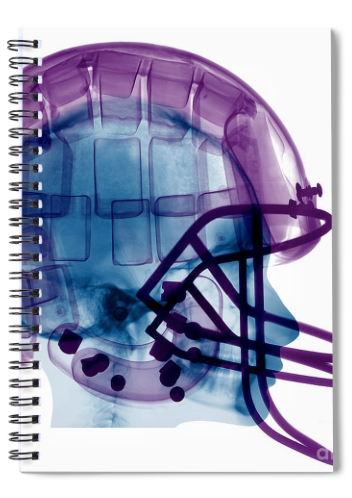
Sports notebooks, phone cases, masks, and more
As rules and regulations change, the future of contact sports remains unclear. For now, anyone participating in contact sports should wear proper safety gear and maintain industry standards.
For a full gallery of sports injuries check the link above and for great sports gifts head to our storefront below.
Sports Phone Cases, Prints, Masks and More
popsci.com
mayoclinic.com
webmd.com

NASA and the Space Age
In 1957, an amazing spectacle appeared in the North American night sky – Sputnik, the first satellite to enter Earth’s orbit. The USSR had successfully sent a rocket into outer space, thus beginning the space race, an event which would last a decade and challenge the best and brightest of two nations.
In response to Sputnik, President Dwight D. Eisenhower created NASA, the first American administration for space exploration in 1958. With Project Mercury, NASA attempted to make the first manned mission into space, but failed to beat the Russians, who sent Yuri Gagarin into orbit in 1961. A month later Alan Shepard became the first American in space and John Glenn followed soon after, orbiting the Earth three times in 1962.
Gallery of NASA Stock Images and Videos
In the Sixties, NASA entered a new era. With the cold war raging and the threat of nuclear armament on the horizon, President John F Kennedy vowed to redouble NASA’s efforts and put an American on the moon by the end of the decade. In 1965, NASA began the Spacelab project, sending the first space station into Earth’s orbit. Despite sustaining damage during take off, the station was repaired in space and orbited the Earth until 1979.
The success of Spacelab led to NASA’s famous Apollo missions to the moon. After many failed attempts, Apollo 8 became the first shuttle to circle the moon in 1968. The following year, the USSR accomplished its first moon tour, leaving the space race at a stalemate.

Astronomy phone cases, masks, tote-bags and more!
With the cold war raging in the east, astronauts Buzz Aldrin and Neil Armstrong of Apollo 11 successfully landed on the moon in 1969. The mission effectively ended the space race and cemented America’s place as the world leader in space exploration. Buzz Aldrin and Neil Armstrong became national heroes and were awarded the Presidential Metal of Freedom later that year.
Since then, NASA has continued its exploration of space sending probes to every planet in our solar system, including the dwarf planet, Pluto. It also landed four rovers on Mars, the last of which, Curiosity, is still collecting data from its craters today.
The recent image of a black hole in the M87 galaxy is more proof of human potential in space exploration. For the Space Age to advance, we must continue NASA’s legacy into the future. For more astronomy images check out the gallery above, and for unique astronomy gifts check out our store front below.
Astronomy Phone Cases, Masks, T-shirts and More
nasa.com
nytimes
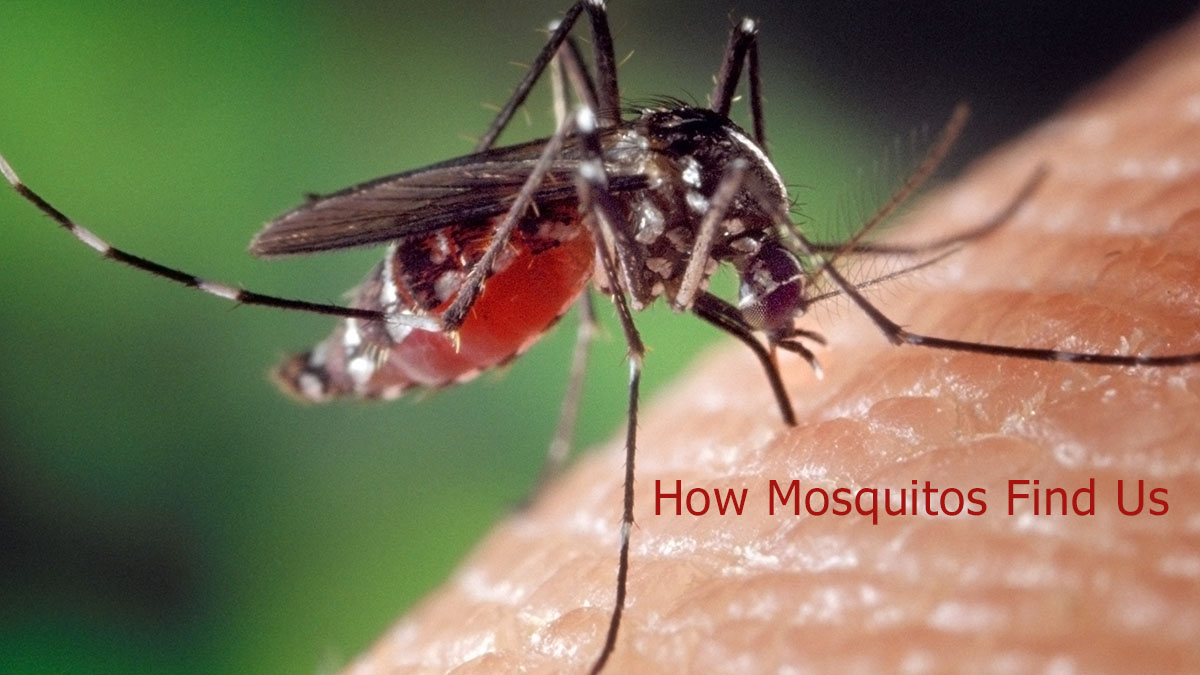
An Aedes Aegypti Mosquito biting a human.
Don't Sweat It: How Mosquitos Find Us
Scientists recently came one step closer to figuring out how to stop mosquitoes from biting us.
Mosquitos have plagued humans and other warm-blooded mammals for eons. Aside from ruining an otherwise beautiful summer evening with their itchy bites, they transmit some of the worst diseases known to man. Malaria, zika, yellow fever, dengue, West Nile Virus, encephalitis, and chikungunya are some of the deadliest.
RF & RM Stock Images of Mosquitos
Many of these have no cure and may cause congenital disabilities or death.
In the United States West Nile virus, eastern equine encephalitis, western equine encephalitis, St. Louis encephalitis, La Crosse encephalitis, dengue, and yellow fever are all transmitted by mosquitoes.
The good news is that scientists continue to discover precisely how mosquitoes find us? It will help us figure out how to stop them from biting us.
The recent finding confirms that it is the acids in our sweat that attract them. Genetically altered mosquitoes that couldn't sense these acids were not drawn to us.
For now, the best method is still to use repellent with DEET (N,N-diethyl-meta-toluamide) or another chemical that masks the smell of our sweat.
The future is looking brighter than ever for us to prevent mosquito bites and thereby eradicate many diseases.

The Link Between Gum Disease and Alzheimer's
Alzheimer's is the most common form of dementia and thereby the fifth leading factor of death worldwide. Over 5 million Americans suffer from this degenerative disease. The exact cause and therefore cure has befuddled scientists and researchers for decades.
Scientists have known that abnormal clumps, amyloid plaques, and tangled bundles of fibers, tau, are involved.
Up until now, these features were the focus of the battle against Alzheimer's, but a recent study shows another possible cause: gum disease.
Stock Images and Video of Alzheimer’s and Gum Disease
This study indicates that amyloid plaques and tau bundles might be existent as a reaction to a specific gum disease bacteria, Porphyromonas gingivalis, traveling to the brain. Overdevelopment of amyloid and tau proteins leads to the blocking of neuron function and the degeneration of brain cells.
The hippocampus is where this process usually begins. Neurons will die as they lose function, and the more this happens, the more the brain is affected. The areas that handle memory are affected first, and eventually the disease will spread to cells that control body function.
In the mouth, Porphyromonas gingivalis, known as Pg, leads to chronic periodontitis, causing chronic inflammation and potential tooth loss. If left untreated, this bacteria can spread into the brain. Pg was found in 51 of 53 Alzheimer patients studied. This connection offers hope for preventing and halting the disease.
Tests to begin formulating a drug that will prevent or help those at risk have already started. In mice, scientists were successful in reducing the number of Pg bacteria in infected brain cells, thereby stopping the production of the toxic proteins amyloid and tau.
There is finally hope, as most people have been touched by this disease, either themselves or by someone they care for.
newscientist.com
webmd.com
nypost.com
cnn.com
cbsnews.co

The Women of Coding
In 1833, Lady Ada Lovelace, the only legitimate daughter of Lord Byron, became the first computer programmer when she created a machine for computing called the Analytical Engine. Her partner, Charles Babbage, designed the hardware, while Lovelace focused on the machine’s inner workings or what we now call “software.” Bringing the machine to its absolute limit, Lovelace published the first computer algorithm in 1843.
Lovelace’s legacy would continue into the 20th century, as women entered the workforce. While men were busy fighting WWII, a group of female computer scientists, including Betty Holberton, Kay McNulty, Marlyn Wescoff, Ruth Lichterman, Fran Bilas and Betty Jean Jennings programmed the ENIAC, one of the first general purpose computers. Although they were called “subprofessionals” by their peers and “refrigerator girls” by historians, Hoberton and her team used ENIAC to make crucial calculations on the trajectory of ballistic missiles for the US and its allies.
View More Women of Coding
The military would give rise to another great coder when Grace Hopper, a professor and computer scientist, joined the navy reserve and developed one of the earliest programming languages, COBOL. Hopper went on to create the first compiler, a device for synthesizing written language into code. By the end of her career, she had risen to the rank of rear admiral and even got a US destroyer named after her.

Science cell phone cases, masks, mugs, tote bags, and more!
In the 1980’s women’s participation in coding suddenly dropped. While the reason is unknown, Sara Kiesler, a social scientist, believes the advent of personal computers was chiefly responsible. Kiesler argues that when computers entered the home, parents made them the domain of boys and not girls. The culture surrounding tech became male-dominated and many women decided to opt out of the field completely. Female participation in programming was cut in half, and today only 18 percent of computer science graduates are women.
If you have a daughter or niece this Women’s History Month, encourage their interest in computers! Tell them that a career in coding is a girl thing too and that they can make history!
Click the link above to see more great female programmers and check out our storefront for great science gifts.
Science Prints, Masks, Mugs, Phone Cases and More
nytimes.com
history.com

Climate Change, Extreme Weather and the Jet Stream
In the last decade or so, we’ve experienced giant tornados, damaging wildfires, flood-inducing rainstorms, fatal heat waves, and droughts destroying crops and livestock like never before.
At the same time, the polar jet stream, a westerly wind generated by solar radiation and the corolla effect (a phenomenon that creates our weather) has been behaving in unprecedented ways. Scientists believe this is not a coincidence, rather, it is related.
Stock Images of Climate Change,
Extreme Weather and the Jet Stream
Normally, the jet stream travels either in a straight line or undulates in waves called Rossby waves. Rossby waves bring warm air northward and cold air southward. This can create a temporary heat wave or a rainstorm.
The jet stream is powered by the temperature differential between the cold arctic air and the warmer air in the lower latitudes. As global warming continues to warm the arctic air, the jet stream is losing its power. The Rossby waves have become larger, expanding much further north and south than before.
They are bringing temperatures and weather that is unusual for our local climate. Records show that Southern U.S. states now get snow more regularly than in the past.
Once Rossby waves, especially weakened ones, reach a certain size they can stall in place, permitting a heat wave or a rain weather system to last days or weeks longer than the norm.
With no end in sight to global warming or even a slowing of it, we are likely to be in for even more extreme weather that increases in intensity and stays put for longer.

Fine Art Prints of Wild Weather on Metal & Canvas
A growing number of scientists are predicting that perhaps as soon as 2050 the climate in the southern latitudes may be unlivable and the Arctic could be our new temperate zone.
Get ready to move north, and bring your umbrella, sunscreen and snow boots.
wikipedia.com
scientficamerican.com
sciencefriday.com

What You Need to Know About Crohn's Disease and Ulcerative Colitis
Crohn’s disease and ulcerative colitis are largely unfamiliar terms. Hundreds of thousands of Americans are affected by these conditions, however many people still don’t know how to identify the two, or understand how they relate and differ.
Crohn’s and colitis are both inflammatory bowel diseases (IBD), which result from an overactive immune response that treats the normal, healthy contents of the colon (such as good bacteria and food) as foreign invaders. When the immune system detects a foreign substance, it sends a sea of white blood cells to the site of this substance, which in turn causes inflammation. Victims of IBD struggle to experience healthy digestion that doesn’t involve their system getting unnecessarily attacked by an immune response.
The body’s reactions to these two diseases are often described similarly: loss of appetite, weight loss, urgent bowel movements, diarrhea, and fatigue. They are both long-term (chronic) conditions; individuals who are affected will likely have symptoms that come and go throughout their lives. The onset of symptoms tends to be inconsistent, and when there are time periods without symptoms the diseases are deemed to be in remission.
Stock Images of Crohn’s Disease and Ulcerative Colitis
Although Crohn’s and colitis have some similar traits, they are certainly not the same condition.
Ulcerative colitis causes inflammation that gives rise to ulcers in the inner lining of the colon (large intestine). The ulcers permit unwanted fluids such as mucous into the digestive system, which perpetuates irritation. It affects the colon exclusively, while Crohn’s disease can affect any part of the gastrointestinal (GI) tract, including the small intestine, large intestine, mouth, stomach, or anus.
While Crohn’s disease can affect many different parts of our anatomy, the most commonly affected site is the ileum, or the area that joins the end of the small intestine and the beginning of the colon. Unlike ulcerative colitis, Crohn’s can affect not only the inner lining of the intestine, but the entire intestinal wall. It is also known to ‘skip’ patches of the intestines, leaving some parts of the anatomy unaffected by the disease, and some parts inflamed and dilapidated. This pattern of damage throughout the bowels distinguishes Crohn’s from ulcerative colitis and other diseases.
The causes of both Crohn’s and colitis still remain somewhat of a mystery to researchers. Consistencies within studies that revolve around genetics have begun to pave the way towards some answers. Many people that have ulcerative colitis have a family member that is also affected; if someone in your family has Crohn’s your chances of developing the disease may be higher.
There have also been studies on environmental factors, finding Crohn’s disease more common in industrialized countries than in the developing world, and more common in urban areas rather than areas encompassed by farmland. Stress and high-fat diets are thought by some to be contributing factors as well, and may trigger an existing condition.
Even if you have family members that suffer from these diseases and are experiencing some of the common symptoms, it is important to be tested by a physician. Multiple tests, including physical exams and diagnostic scans, are often required for a proper diagnosis.
Although there is no cure for ulcerative colitis or Crohn’s disease, there are many different kinds of medicines available to keep symptoms at bay and remission intact. Researchers are continuing to study possible causes, however these conditions have thus far remained puzzling, even to experts.
crohnscolitisfoundation.org
niddk.nih.gov/health-information/digestive-diseases/crohns-disease
niddk.nih.gov/health-information/digestive-diseases/ulcerative-colitis

The Dead Do Tell Tales
A murder victim can no longer speak like you and I can, but through scientific methods they may have an awful lot to say. This is the science of forensics, and there are many branches of it.
Forensics has been popularized by many TV show, books, and movies. Everyone is familiar with the fast-paced crime solving that is showcased: a piece of evidence gets delivered to a crime lab, within hours or mere minutes it is analyzed, and the forensic scientist is off to capture the criminal.
Stock Images of Forensic Science
In reality, what forensic scientists do is a bit different. They rarely, if ever, visit a crime scene, and they certainly don’t chase down suspects, gun in hand, after spending an hour in the lab doing DNA analysis. A typical forensic scientist spends their entire day in the lab. Most DNA takes about 30 days to process due to budgetary constraints and the vast number of cases.
Despite not usually doing filed work, the excitement and rewards of being part of a successful case and of capturing a criminal are just as satisfying.
Custom Forensic Themed Mugs, Totes, Masks, T-shirts and More
Forensics is a large, diversified field. A few of the branches include psychology, accounting, botany, entomology (insects), dactyloscopy (fingerprints), microbiology or the study of the necrobiome (organisms related to a decaying corpse, toxicology, and anthropology).
Forensic anthropology is considered one of the most fascinating fields. It deals with skeletonized, decomposed, burned, or otherwise unrecognizable human remains, such as in a plane crash. A forensic anthropologist works through an intricate puzzle, finding clues in the tiniest details. These scientists often work with others in the field such as dentists, pathologists, investigators, and other expert scientists.
Forensic anthropologists can use their knowledge to determine age, sex, ancestry, and stature from a minuscule amount of human remains. They can also look into a body’s history; past injuries indicated by bone fractures, or evidence of diseases such as cancer. All of these details will narrow down the identification of a person.
Even though forensic anthropology is now in the realm of hard science, it got its start with pseudoscience. Phrenology and physiognomy, early notions that temperament and character can be deduced from physical appearance, were early forms of forensic anthropology that have since been discarded as junk science.
Today, forensic anthropology is a highly trusted means to discover the truth behind a crime. Each year, more tools are added to this arsenal as scientific advances are made.
sciencemag.org
wikipedia.com

Feb 9, 1960, Black students sit-in at Woolworth's lunch counter. © Bruce Roberts/Science Source
Black History Month Started as Negro History Week
In 1925 Carter G. Woodson announced that Negro History Week, a celebration of African Americans’ contributions to US history, would be held the following year. He chose the week in February when both Abraham Lincoln and Frederick Douglass were born. Woodson said, “If a race has no history, it has no worthwhile tradition, it becomes a negligible factor in the thought of the world, and it stands in danger of being exterminated.”
Stock Images and Videos about Black History Month
Woodson was born in 1875 in Virginia to parents who were former slaves. Growing up in a large, poor family, Woodson could not attend school on a regular basis. He was mostly self-taught. He even continued his studies while he worked as a coal miner.
At the age of 20, he entered Douglass High School, graduating in only two years. He went on to attend college and continued his schooling for many years. In 1912 Woodson received his Ph.D. in history from Harvard University.
The popularity of Negro History Week grew over the years. By the 1960s the civil rights movement had gained momentum as more and more African Americans realized the importance of their history to the United States. The week expanded to a month-long celebration on many college campuses.
In 1976, the country’s bicentennial, President Gerald R. Ford officially designated the month of February to be Black History Month. He called on all Americans to “seize the opportunity to honor the too-often neglected accomplishments of black Americans in every area of endeavor throughout our history.”
We continue to commemorate the vast contributions of African Americans to our history and culture each February. Canada, the United Kingdom, the Republic of Ireland and the Netherlands also celebrate Black History Month each year.
A number of high profile African Americans, such as Morgan Freeman and Stacey Dash, are critical of Black History Month. Some feel there should no longer be a need for it, that Black history should by now have been integrated into the consciousness of American society. Others are concerned that it may subliminally imply that the contributions of blacks need only be considered one month out of the year.
In any case, for now, each February, we continue to honor, memorialize and praise the contributions of African American politicians, mathematicians, historians, physicists, teachers, musicians, and all that lead the way forward.

Alchemy and the Road to Science
Today alchemy conjures up images of boiling cauldrons and magic elixirs, but the past reveals its lasting impact on the foundation of science.
Alchemy began in ancient Egypt, sometime between the 4th and 3rd century BC, with the aim of transmuting base metals (i.e led) into noble metals, such as gold.
In the 8th century AD, Arab alchemists invented the first laboratories for transmutation, creating complex methods of classification and documentation. Jabir ibn Hayyan and Muhammad ibn Zakarīya Rāzi even made breakthroughs in chemistry, discovering sulfuric and hydrochloric acid.
Alchemy Stock Photos
Islamic alchemy inspired the later European search for the philosopher’s stone, an object believed to turn base metals into gold and bestow its owner with eternal life. The investigation lasted hundreds of years and although unsuccessful, produced countless experiments and lengthy chronicles of their results.
The pursuit of the philosopher’s stone was echoed in China by the search for the elixir of immortality. Like the Europeans, the Chinese alchemists believed in the medicinal power of metals and used them in their potions. Famously, the Jiajing Emperor of the Ming Dynasty drank a fatal dosage of mercury, believing it was the famed elixir.
During the 17th century, Robert Boyle invented modern methods of chemical investigation. Boyle’s highly controlled experiments made alchemy appear blunt and archaic. Alchemy became associated with superstition and the occult and quickly fell out of favor.

Although it had a brief revival in the 18th century with the spiritualist movement, alchemy remained the fancy of counter culture.
While alchemy’s past may be meandering and at times ridiculous, its impact on science and the world that followed is undeniable. For more alchemy images click the links above and be sure to check out our storefront for great chemistry products!
Chemistry Handbags, Mugs and Notebooks
wikipedia.com
Britannica.com
Smithsonian.com

Around the World in 118 Elements
Look around. How many things exist in the world? Consider that every one of them is comprised of only 118 elements.
In order to understand these elements we needed a means of organizing and categorizing them. Human beings struggled for a millennia to devise such a system and In 1869, the Russian chemist Dmitri Mendeleev gave us the periodic table as we know it.
Stock Images & Video of the Periodic Table
Mendeleev created a diagram that resembles a lopsided castle. Each row and column has its own meaning. Each element appears in order according to the number of its protons. For example, H (hydrogen) comes first with 1 proton, He (helium) with 3 protons, and so forth through to Og (oganesson) with 118 protons.
The vertical columns, or groups, tells us the number of electrons in the outer orbital and the rows, or periods, tell us the number of electron orbitals an element has.
At 46 percent, Oxygen is the most common element on earth. Carbon is found in all living things: people, dogs, cats, plants, birds, trees. At a total of 31 grams on earth, astatine is the rarest natural element.

Chemistry Themed T-shirts, Mugs and More Gift Ideas
People have known some of the elements for thousands of years, such as gold, silver, copper and mercury. But others like potassium, iodine, zinc and helium were only discovered in the 19th century. Still newer elements like Ununseptium and Flerovium are manmade.
When the periodic table was first developed it had many gaps in it and in the 19th and 20th century scientists raced to fill them. Currently, the table is complete, although more elements may be added as science develops.
Understanding of the elements is the basis of chemistry, biology, physics and all knowledge stemming from these fields.
The periodic table is so significant it’s still in use today and can be found in every child’s science classroom.
In 2019 the world will celebrate 150 years of the ingenious periodic table.

How the Stars Got Their Colors
After seeing hundreds of dazzling galaxies and nebulae in print media, one might have a preconceived notion of what it’s like to look through a telescope. The reality, however, is somewhat different.
Celestial objects such as galaxies, star clusters and planetary systems are some of the most beautiful treasures in outer space. Unfortunately, they’re so far away that they mostly appear faint to the naked eye, even when viewed through a telescope. The problem is that, unlike a camera, our eyes cannot adjust their exposure time in order to soak up more light from these distant objects.
For astrophotographers to get the vibrant colors of a nebula or galaxy, they need to rely on a number of techniques, including long exposures, color compositing and sometimes editing in post-production.

Eagle Nebula, Messier 16. SS2596669.
The famous Eagle Nebula pictured here is actually three monochromatic images mapped to different color wavelengths combined to create one image. Some might say that this makes it fake or embellished but the truth is more complicated.
The colors that astrophotographers use to create images like this reflect the chemicals in the celestial objects themselves, so they are drawn from real scientific data. Nevertheless, it’s still unclear how accurate the colors actually are.
Astrophotography Stock Image Gallery

Astronomy mugs, masks, phone cases and prints
Of course, visual perception is always subjective, limited by our eyes and brain, so it’s worth considering how accurate our image of reality ever is.
What do you think?
Get a closer look with the astrophotography gallery below and be sure to visit our storefront for great astrophotography products.
Astrophotography Mugs, Masks, Phone Cases and More
www.photographingspace.com
www.astropix.com

One Hundred Years of the Flu Virus
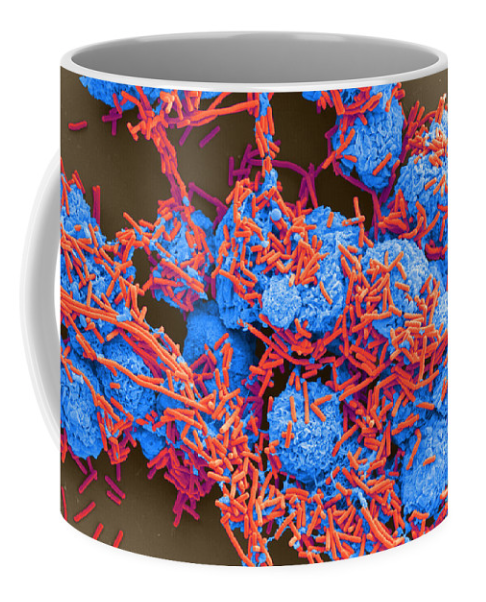
100 years ago one of the deadliest natural disasters hit humanity, killing approximately 4 percent of the earth's population. Even people in remote Pacific Islands and the Arctic met their demise due to this virus. This shocking number of deaths was caused by the flu, although these days most healthy people take the flu lightly.
That particular strain, the H1N1 influenza virus, commonly known as the Spanish Flu, claimed many young as well as many previously healthy adults. Additionally, since it arrived on the heels of the Great War, many people were malnourished, living in overcrowded medical camps with little access to good hygiene.
Royalty-Free and Rights-Managed Stock Images of the Flu
Government censorship may have played a role in the pandemic. To appear strong, many governments didn't reveal how devastating the flu was, giving no warning to the public to protect themselves. In Spain this information was not censored, giving the world the false impression that the Spanish were harder hit than the rest of the world. Thus the common moniker of the H1N1 strain in 1918 was the Spanish Flu.
These days you can walk into the corner drug store and within a few minutes walk out inoculated against the flu. Each year scientists update the formula to keep up with the ever-mutating virus strains.
In addition to the vaccine, we now know to take more steps to minimize infection. These precautions include washing our hands frequently, not touching our faces, standing at least six feet from anyone with the flu, nor touching an infected person’s phone, keyboard or other personal items. In a more general sense, we know to keep our immune systems healthy by getting enough sleep, eating right and regulating stress factors.
How can you tell if someone has the flu, not just a bad cold? Ultimately, without a medical test it is impossible to tell precisely, but here are a few guidelines.
Virus Coffee Mugs, Masks, Tote Bags and Other Gifts
Common cold:
comes on gradually
rarely have a fever
mild aches
sore throat and runny nose are common
The Flu:
sudden onset
high fever with chills
body aches
fatigue
headaches
sore throat and runny nose are rare
Most people recover from the flu on their own and suffer no complications. But one of the main reasons to avoid contracting it is to avoid passing it on to family and friends who are elderly, very young or otherwise susceptible to disease.
Late autumn is the perfect time to get your flu shot. It only takes a few seconds and you'll be covered until the next flu season.
webmd.com
cdc.gov

The Quirky Beginning of Biomedical Research, with Royalty Free Images
Few of us give a second thought to popping an aspirin or any other over-the-counter painkiller for a minor ache or pain. Yet, this simple act wouldn’t be possible without the field of biomedical research.
Every parent can breathe easier knowing that there are vaccines against measles, whooping cough, polio, chickenpox, mumps, tetanus, and many other childhood diseases. Our modern world also affords us medication to help control diabetes, high blood pressure, high cholesterol and other life-threatening conditions.
Royalty-Free Stock Images of Biomedical Research
Part of any thorough research method is the clinical trial or the testing of a medication, vaccine, or health recommendation. Clinical trials have a quirky history.
The first recorded instance of a clinical trial took place in 562 BC. King Nebuchadnezzar, who was not a scientist, wanted his people in top physical condition. He ordered them to consume only meat and wine, believing these to be the most nutritious foods.
Several vegetable lovers persuaded him to be allowed to eat legumes and water instead. After 10 days the legume and water group was clearly healthier and were allowed to continue their diet. Thus, the first public health recommendation was issued.
In 1747, what is considered to be the first legitimate clinical trial took place aboard a British Navy ship. Conducted by Dr. James Lind, a Scottish Physician, in an effort to cure scurvy. Over 2 million sailors died of this malady. Purple bruises were the first signs of the disease, and if left untreated it led to death after six weeks of suffering.
Dr. Lind divided 12 afflicted sailors into 6 pairs. The 6 remedies on trial were: cider, a solution of sulfuric acid and alcohol, seawater, a paste of garlic, mustard and horseradish, vinegar, and the last 2 sailors received lemons and oranges.
These two sailors were well in less than a week. However, citrus was expensive and it took another 50 years before the Navy was able to provide lemon juice to their sailors, and scurvy was eradicated from life at sea.

Biomedical Shower Curtains, Masks, and Other Gifts
Today’s research and clinical trials are very different. Most medicines require 10 years of precision research, with an average of 6-7 years of trials. On top of this time investment, it is not uncommon for medicines to cost around $2.6 billion to develop.
Biomedical research continues to make strides in the fields of aging, cancer, diabetes, genetics, immunology, neuroscience, and virology.
Despite the time and monetary costs, most will agree that the value of biomedical research is worthwhile each time a life is saved, suffering is diminished or a disease is prevented.