
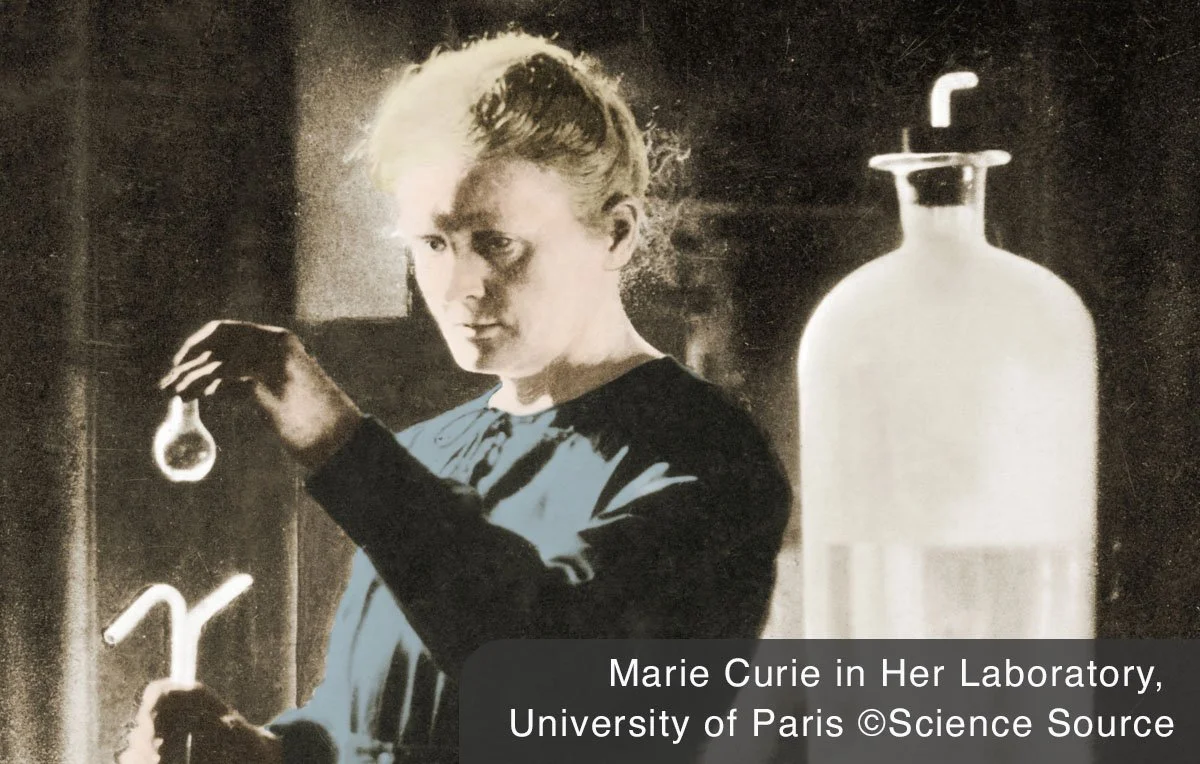
She Developed Mobile X-Rays to Save Lives in World War I
When people think of Marie Curie, they often think of her Nobel Prize–winning discoveries in radioactivity. But one of her most impactful contributions came during World War I, when she helped bring X-ray imaging directly to the battlefield.
At the time, doctors struggled to locate bullets and shrapnel in wounded soldiers. Surgery was often slow, imprecise, and life-threatening.
Curie changed that.
GALLERY OF MARIE CURIE STOCK HISTORY CONTENT
She developed mobile radiography units— later known as “Little Curies”—that could travel to field hospitals. These vehicles allowed doctors to see inside the body in real time, dramatically improving treatment and survival rates.
A Mother and Daughter on the Front Lines
Curie’s work became a family mission. Her daughter, Irène Joliot-Curie, joined her in operating the X-ray units and training others.
Together, they established radiology programs, equipped over 200 units, and trained technicians—many of them women—to use this new technology under wartime conditions.
It’s estimated that more than a million soldiers benefited from these mobile X-ray services.
A Lasting Medical Legacy
Today, X-ray imaging is a standard diagnostic tool around the world. Curie’s wartime innovation helped transform it from a scientific discovery into a practical, life-saving medical technology.
Her legacy is not only in what she discovered—but in how she applied science to save lives.
Explore the Story Through Visual History
At Science Source, we offer a vast collection of scientific, medical, and historical stock imagery that brings stories like this to life. From early radiology equipment to archival images of wartime medicine, our collection helps educators, publishers, and creators illustrate the human impact of scientific breakthroughs.
Explore our history collection to discover powerful visuals that connect science, medicine, and real-world events.
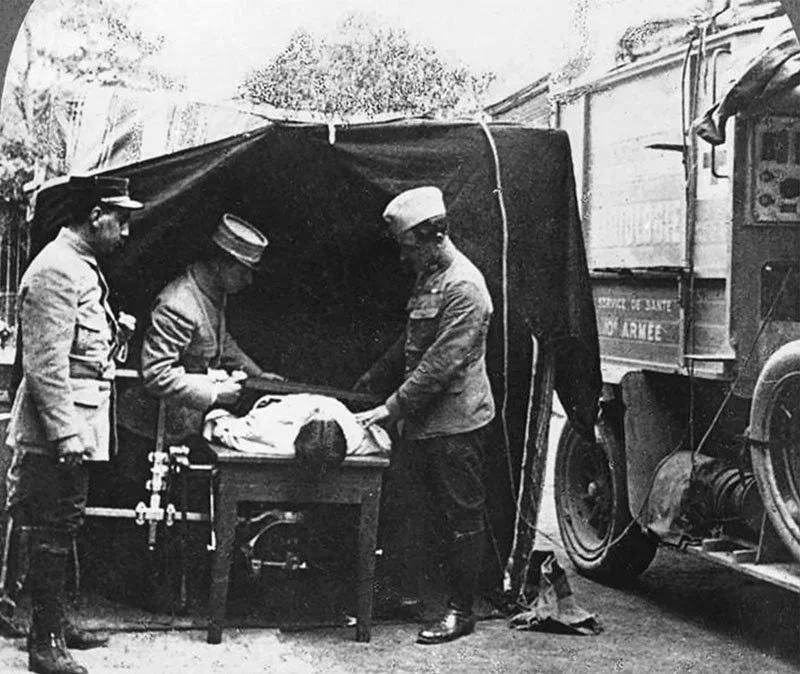
World War I French field hospital locating bullet with x-ray machine.
During World War I, Marie Curie developed mobile radiography units, called Little Curies, to provide X-ray services to field hospitals. Stereograph, Keystone View Company, c. 1915. ©Science Source
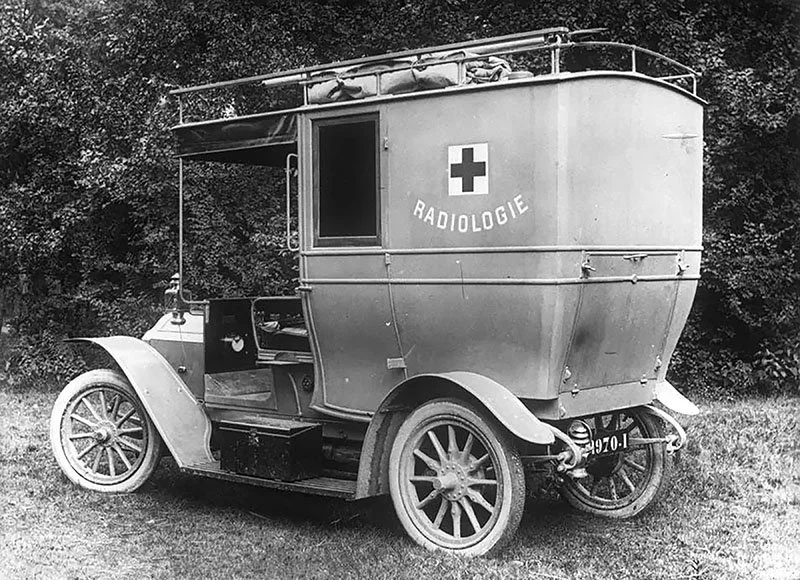
A Petite Curie, Marie Curie's Mobile X-ray Unit.
Marie Curie developed mobile radiography units, called Petite (Little) Curies, to provide X-ray services to field hospitals © Science Source
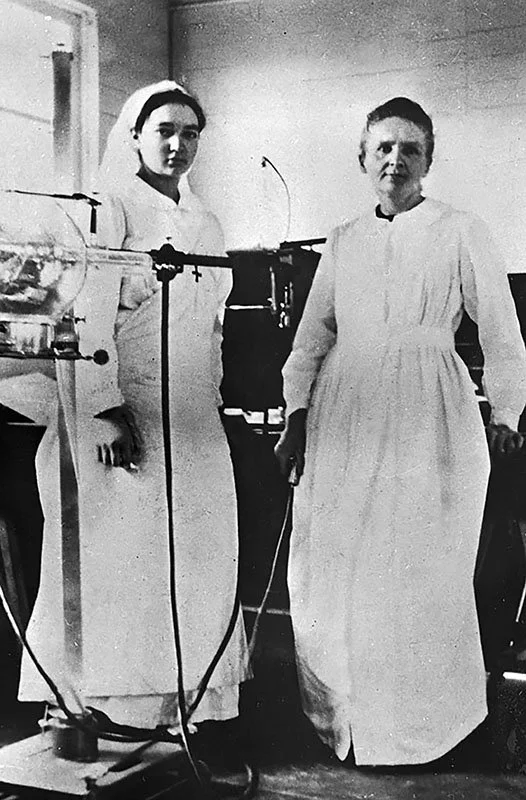
Marie Curie and Her Daughter, Irene.
Irene and Marie Curie operating a mobile X-ray machine at Hoogstade Hospital in Belgium in 1915, during World War I. Together, they trained numerous technicians and saved the lives of thousands of injured soldiers. © Science Source