

Visit our Red Bubble Shop or check our our many other historical gift ideas

The Real Pocahontas
Pocahontas has been a legend of American folk culture for hundreds of years – the subject of romantic novels, documentaries and even Disney films. As with many legends as time goes on the myth tends to eclipse the reality. Today we’ll try to unearth the real Pocahontas.
First of all, her name was not Pocahontas. Born in 1596, her real name was Amonute and sometimes Matoaka. Pocahontas was a nickname, which in Algonquin means “playful one” or “misbehaving child.”
Legend claims Pocahontas fell in love with John Smith, an English settler at Jonestown who was captured by chief Powhatan her father. The two shared a secret love affair that they had to keep hidden from the Algonquins. In actuality, there was probably little romance between the two. Pocahontas was twelve when she met John Smith and their only recorded interaction was a time when she helped Smith learn portions of the Algonquin language during his captivity.
Stock Photo Gallery of Native Americans
After his imprisonment, John Smith was sentenced to death. As the tribesmen placed his head on a stone for execution, Pocahontas intervened, pleading with her father to let her lover go. In all likelihood, John Smith did not face execution that day. Algonquins often placed people’s heads on stones for religious rituals. It is not unlikely that John Smith was being anointed before his planned release later that day..

Native American mug and more!
Powhatan dispatched of John Smith and Pocahontas saw mournfully to her lovers’ departure – a bitter sweet romance that gave her a new appreciation of how two peoples can live in harmony.
Records show that Pocahontas’ true love was actually John Rolfe, a man she married in 1614 after her own captivity among European colonists following the First Anglo-Powhatan War. Pocahontas converted to Christianity and was baptized with the name “Rebecca.” She lived among Europeans until her death on a ship bound for Virginia in 1617.
Science Source is a great source of Historic images that illuminate both the facts and legends of the past. Explore more of our images in the links above and for great history prints, mugs, and t-shirts check out our storefront below.
Native American prints and decor

American Pirate Charles Gibbs Leads Mutiny, 1830
Blackbeard and Other Swashbuckling Pirates
Piracy is criminal activity, such as robbery, violence, or kidnapping, on the high seas. Yet, we love pirates.
We dress-up like them, make kid's movies about them, and enjoy cartoons about them.
The history of piracy goes back to 1500 BC from the Phoenicians to the present time.
Early Pirates also include the Vikings who raided many coastal towns and cities.
When most people are talking about pirates, they refer to the golden age of swashbuckling pirates.
In the Caribbean, in the early 17th century, the English took over Tortuga. They invited pirates to attack their enemies, and they did.
Stock Pictures of Pirates
Well known pirates, also known as privateers, include Edward Teach aka Blackbeard, Barth Roberts, Captain Kidd, Calico Jack Rackham, Captain Samuel Bellamy, Hanry Morgan, and Anne Bonnie.

VISIT OUR FINE ART AMERICA GIFT SHOP
Many people are not aware that the U.S. Constitution has a provision for the United States to hire privateers.
Vikings raided cities all along the coastlines for hundreds of years but the most popular and well-known pirates are from about 300 years ago. Think Pirates of the Caribbean.
The Spanish encouraged pirates to attack their enemies. These buccaneers grew so rich they took over the island of Tortuga.
This is the time and place that is heralded in motion pictures and children's books. There was a camaraderie or brotherhood amongst pirates.
By the mid 18th century, this had changed, and many pirate ships ran by enslaving their crews.
To this day, pirates ply the ocean around the world. The romance is gone, though. High powered assault rifles have replaced swords. But, the hunt for treasure and kidnapping remains.

Super Earths and Exoplanets
As we explore further afield from our home planet, we learn there are not only other systems, but many other planets in these systems. There are people who look to these for another earth and for alien life.
Planets outside of our solar system are called exoplanets.
Gallery of Stock Pictures of Super-Earths and Exoplanets
Just as our solar system has planets of different sizes and types, planets in other systems are varied in size and composition.
To date, we have found 3,242 systems with planets, many with multiple planets, bringing the number of exoplanets we know of to 4,395.

Planets are categorized by their mass. Any planet with a mass larger than earth without being 14 times higher in mass is considered a super-earth.
The designation doesn't speak to its composition or whether it would be a friendly place for us humans to live. It only tells us the comparative mass of an exoplanet.
Recently, NASA discovered a new super-planet naming it TOI-561b.
TOI-561b travels around its sun twice as fast as we travel around ours. So it experiences two days in the time we experience one.
Life is unlikely to exist there as the temperature on it is 3,140 degrees Fahrenheit.
Yet, it is exciting to keep discovering more and more systems and planets. Perhaps, one day, we'll find one more compatible with life on our earth,

The History of Christmas
As people put up Christmas trees and decorate their homes, it’s easy to believe these traditions have been around since year one, but Christmas and the holidays surrounding December 25th have taken many forms.
The origin of Christmas comes from three sources: it is the date of the winter solstice on the Roman calendar, it is about nine months from the vernal equinox (March 25th) and it is the date set for the birth of Christ.
Before Christendom the Roman Empire celebrated Saturnalia, a holiday honoring the Roman god, Saturn, the farther of Jupiter. During Saturnalia social customs were flipped upside down. Slaves ate at their master’s tables, women flirted with men and gambling became legal. Saturnalia also involved public banquets and gift giving, which may have influenced later Christian traditions. There were even reports of naked caroling!
Origins of Christmas stock Image Gallery

Cards, prints, masks, tote-bags and more
The Christmas tree has its origins in 16th century Germany. While writing a sermon at night in a starry evergreen forest, the Protestant Christian reformer, Martin Luther, is said to have added lighted candles to a tree and put it into his house. Other Protestant Germans followed suit and the tradition spread. By the second half of the 19th century, the tradition had moved beyond Germany, first among the upper classes and eventually into lower areas of society.
While you are making your shopping rounds this holiday season, attending religious services or making time to be with family, reflect on the long history behind the season.
Be sure to check out our great holiday gifts below and click the links above to see more historical images of the origins of Christmas. From all of us from Science Source, we’d like to wish you a Merry Christmas and a safe and happy holiday season!
Christmas cards, prints, masks, and other gifts

The Importance of Protein Folding
The human body uses protein in innumerable ways. They are the building blocks of your body, and it's many functions. Your cells are continually manufacturing proteins; while you sleep, walk or even now as you read this blog.
Proteins make up cellular channels, are structural, act as enzymes, and are part of your immune system. These proteins are formed as strings and can be very long. Folding proteins - just as folding laundry - give them organization, condenses their size, but unlike you laundry it also provides function.
Gallery of Human Proteins and Protein Folding

The human body is made up of cells, and inside these cells are millions of tiny machines made up of folded proteins. These are found in every single living thing.
These proteins are folded into a specific shape to allow them to function.
If you unfold one, you'll find a string of amino acids - like beads on a necklace. These long strings of amino acids only function once they have folded into a specific shape. If the shape is slightly off, the protein will not function.
Once scientists understand how proteins fold, they will be able to develop methods to cure and prevent innumerable diseases.

RNA polymerase transcribing DNA
Types of Vaccines: Whole Pathogen, Subunit, and Nucleic Acid (mRNA & DNA)
This past year of the pandemic has brought with it much suffering, but it has also brought an amazing advancement in medical science. It will be the first vaccine that uses a form of nucleic acid, in this case, mRNA (messenger RNA).
Not only will this vaccine bring the world out of the shadow of COVID-19, but it will also open the door to a myriad of other healthcare developments.
Stock Images of mRNA
First, an overview of how vaccines work. Your body is naturally good at defending itself against intruders such as bacterias and viruses. In fact, you are exposed to thousands each day. If any make it through your first line of defense, your immune systme takes action.
A virus is called an antigen. It alerts your immune system to create antibodies, which kill the virus or render it ineffective. Depending on the virus, these antibodies, once triggered, stay effective for months, years, and often a lifetime.
A vaccine works by tricking the body into creating these protective antibodies, without the body needing to get sick.
Traditional or classic vaccines use a method referred to as Whole Pathogen. They use the entire virus, either inactivated (dead) or attenuated (weakened) form.
Another type of vaccine is called Subunit. It uses only part of the virus.
Art Prints and Posters of Microbiology on Fine Art America
The newest form of vaccine, and the type used for COVID-19 is a Nucleic Acid vaccine, which uses either DNA or mRNA (messenger RNA). This genetic material tells the cells to manufacture the virus or a portion of it. The COVID-19 vaccine uses mRNA that creates just the spike protein that is found on the coronavirus. Our immune system will create antibodies that then attack the coronavirus since it is covered in these spike proteins.
It is the first nucleic acid vaccine ever approved and in use. It is certainly laying the groundwork for many other vaccines to help rid humanity of other diseases.
Without this worldwide health crisis bringing focus and a global collaborative effort, it may have taken many years or even decades for Medicine to have advanced to this point.
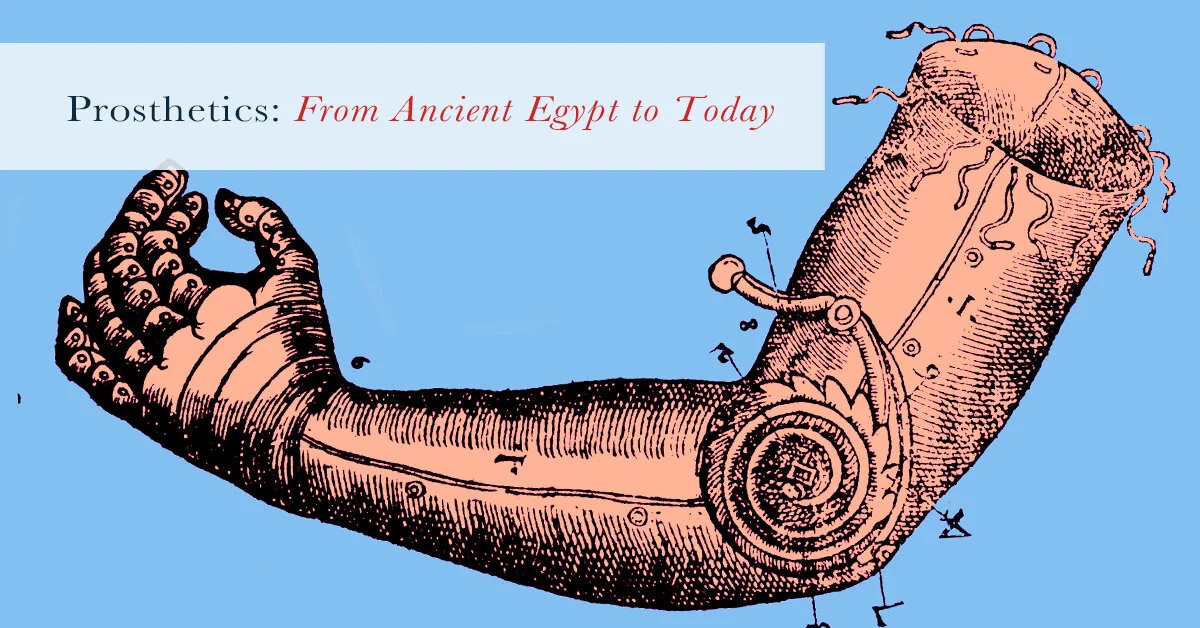
History of Prosthetics: From Ancient Egypt to Today
Prosthetics originated in the Near East around 3000 BC, with the earliest evidence appearing in ancient Egypt and Iran. The first known example was a big toe on the foot of a mummy found in 2000 in the Egyptian necropolis near ancient Thebes.
In the 1st century AD, Pliny the Elder recorded the story of Roman general, Marcus Sergius, who lost his right hand in the Second Punic War and got an iron replacement so he could hold his shield in battle.
Prosthetic Stock Image Gallery
Improvements in amputation surgery and prosthetic design came in France during the 1500’s from Ambroise Paré. Among his inventions was a kneeling peg leg, which had an adjustable harness, a fixed foot position, and a locking function.

Medical mugs, prints, phones cases, t-shirts and more
Through the years Prosthetic devices have been an asset to people in the armed forces. Countless field workers who have lost limbs in battle have had their lives transformed by the benefits of prosthetic technology. The Iraq war led to rapid advancement and development in prosthetic technology and now over 1,000 Iraq war veterans use prosthetic limbs.
Today, prosthetics can be made by hand or with the help of computer programs that create designs and analyze the items using 2-D and 3-D graphics. Advancements in robotics continue to improve prosthetic items and in the future, it is not inconceivable that replacement limbs will be as effective as organic ones.
For stock images of prosthetic technology follow the link above and for science products check out our storefront below.
Medical Microscope - Gift Ideas for the Medical Professional

Two Smiling People with Down Syndrome Stand in an Industrial Kitchen, a Muffin Tin in Front of Them
Down Syndrome Awareness
Last month was Down Syndrome Awareness Month. According to The National Down Syndrome Society, the month is an opportunity to spread awareness about people with Down Syndrome by celebrating their abilities and accomplishments, rather than their disability.
Stock image and video gallery of down syndrome awareness
Over the years, The National Down Syndrome Society has devoted itself to the specific health and education needs of people with Down Syndrome. The NDSS raises money through direct donations and fundraisers such as the Buddywalk each election year. They also advocate for legal protections for people with down syndrome and fight to preserve government assistance programs.
Down Syndrome is one of the most common chromosomal diseases, affecting about 6,000 newborns each year. While there is no cure for Down Syndrome, organizations such as the NDSS continue to provide people with the condition with the help and opportunities they need to live happy and fulfilling lives. As their website mentions, people with Down Syndrome drive cars, go to college, get jobs, date, and get married every day! Find out how you can help them fulfill their dreams by visiting the NDSS website below.
DNA and Genetics Themed Gifts and Home Decor
At Science Source, we proudly celebrate people from different backgrounds and experiences. We are excited to celebrate Down Syndrome Awareness Month by offering a broad and inclusive selection of stock images and videos.
Public Health: Then and Now

James Lind’s discovery of the cause of scurvy was published in an article in 1754. In it, he argued the disease could be mitigated with the introduction of fruit on lengthy voyages at sea. In the following years, efforts were made to propagate health standards in the British navy and among the broader public. Modern public health was born.
While doctors treat people's illnesses, public health workers attempt to prevent illnesses and injuries from ever occurring. A broad-ranging effort, public health involves many different institutions and disciplines, including epidemiology, biostatistics, social sciences, and health service management.
Stock Image Gallery of Public Health
Public health developed rapidly in 19th century when advances in science led to a greater understanding of the cause and spread of diseases. New strategies developed, requiring community-wide participation and interactions between different organizations and agencies
Doctor and public health worker Sara Josephine Baker, M.D. established some of the first public health agencies in the US. Centered in New York City, her nursing homes helped mothers learn to dress, feed, and bathe newborns to prevent diseases. Lillian Wald, another health organizer, founded the Henry Street Settlement house in New York, which brought healthcare services to poor urban people.

Angiogram and other great health products
In 1948, the World Health Organization (WHO) was formed, as an agency of the United Nations responsible for international public health. Its broad mandate is to advocate for universal healthcare, monitor public health risks, coordinate responses to health emergencies, and promote human health and well being.
Today, as we battle the Corona virus, public health workers are on the front lines, delivering the latest news about the virus to help prevent infection. Due to their efforts, the pandemic will hopefully be short lived, returning civilization to normal and saving the lives of millions.
Medical Science prints, phone cases, masks, t-shirts and more

Neurogenetics
Neurogenetics is the study of the nervous system as it pertains to genetics. Using phenotypes, or observable characteristics and traits, neurogenetics attempts to reach conclusions about individuals of one or more species based on hereditary.
Seymour Benzer considered the father of neurogenetics, made his first discovery in the field of neurogenetics when he pinpointed a link between the circadian rhythm and genes. He found that animals go through cycles of sleeping and waking naturally and not by anything learned or developed. This led him to further investigations into the traits and behaviors of individuals as they relate to genetics. Benzer made groundbreaking discoveries in neurodegeneration when he discovered similarities between fruit flies and human genes. This helped him isolate neurological diseases in humans.

Cajal tote bag and other products.
Advances in molecular biology and the species-wide genome project have made it possible to map an individual's entire genome. While this information is key to understanding neurobiology, a comprehensive picture of an individual’s traits and behaviors can only be achieved by taking into account additional factors.
The classic debate of nature vs. nurture clarifies that one’s genes are not the only determinant of a given biological outcome. Science reveals that traits and behaviors are due to a confluence of many genes, as well as regulatory factors like neurotransmitter levels and one’s environmental influences.
New developments in genetic engineering are being used to alter genetic material to potentially negate or suppress the effects of genetically linked diseases. Innovations in technologies, such as CRISPR, allow genetic material to be added, removed, or altered at particular locations in the genome.
It it possible that one day genetic editing could be used to cure neurogenic diseases such as Alzheimer's disease and Parkinson's. Research on this front, however, is still ongoing.

Flower Micrographs: RF & RM Images
Have you ever wondered how photographers capture the minute details of nature – such as the fiddleheads of a fern or the bacteria on a leaf? Over the years professionals have used a number of techniques.
The term photo-macrograph was first introduced in 1899 by W. H. Walmsley for images with less than 10 diameters of magnification to distinguish them from true photo-micrographs.
One of the earliest macro-photographers was Percy Smith, born in 1880. He was a British nature documentary filmmaker, famous for close-up films and photographs. One of his best-known pieces is called “The Birth of a Flower” a 2:13 minute film featuring a blooming flower.
Gallery of Plant and Flower SEMS Stock Photography
Photographers have also used the scanning electron microscope (or SEM). Invented in 1937 by Manfred von Ardenne, the SEM uses electrons to record the surface topography of objects.

Diatoms Eating a Maple Leaf Tote Bag
Amazing Microscopic Images on T-shirts, Masks, Mugs, Framed prints and More
SEMs (scanning electron micrographs) as a rule are produced in black and white. But photographers often colorize them by hand using a technology called cathodoluminescence, which analyzes the light spectrum emitted by images and creates a semi-accurate color representation.
Macro photography and SEMs are essential visual resources for the scientific community, helping with our understand of everything from plant species to diseases. To see more plant macro shots and SEMs visit our gallery and for macro prints and products head to the storefront above.

Scanning electron micrograph (SEM) of a water bear (Macrobiotus sapiens) in moss ©Eye of Science/Science Source
Taking a Closer Look at Microscopy for Medical and Scientific Use
Read any scientific or medical news story and you can see that microscopy has come a long way since your high school biology class microscope.
It isn't just higher magnification, but crisp details, a greater depth of field, viewing internal features, and colorful 3D-like visuals that fascinate us. There have been many advancements to light microscopes and a multitude of new kinds that can see so much more than we could have ever expected.
Let's take a closer look!

Four types of Light micrographs: Bright Field, Dark Field, Polarized, Phase Contrast. © Marek Mis/Science Source
The basic microscope we used as a kid is the standard “light microscope”. Simply put, it uses light and a set of lenses. The addition of filters, specialized mirrors, lasers, specific light spectrums, and other features gives us much more detail.
More advanced devices include Scanning Electron Microscopes (SEM), Transmission Electron Microscopes (TEM), Atomic Force Microscopes (AFM), and Scanning Tunneling Microscopes (STM).
Commonly used techniques when viewing slides on a light microscope are Bright Field, Dark Field, Fluorescence, Differential Interference Contrast (DIC), Phase Contrast, and Confocal microscopy.
Light MIcroscope Bright Field: the light source shines directly from underneath the specimen, creating a light-colored or bright area around it.

Purkinje neurons of the cerebellar cortex stained with four staining methods: hematoxylin eosin (top left), cresyl violet (top right), Cajal's silver nitrate (bottom left) and silver method for Golgi apparatus (bottom right). © Jose Luis Calvo/Science Source
Light Microscope Dark Field: the light source is occulted, so it reaches the specimen at different angles giving us slightly more varied details than if it was lit from directly underneath. The area around the specimen is dark or black.
Fluorescence: This uses light filters and specific wavelengths. Short wavelengths are reflected down to the specimen, which then fluoresces or gives off long wavelengths of light. These are reflected up to a mirror that allows long wavelengths to pass through to the lens.
Phase Contrast: Using a special lens and filters it allows viewing of transparent and colorless specimens. It looks similar to DIC micrography but lacks shadows, making it a bit more two dimensional.

Different illumination techniques of a light microscope: dark field, fluorescence, bright field, phase contrast, DIC (differential interference contrast). Child’s hair strand © Ted Kinsman/Science Source
Differential Interference Contrast Microscopy (DIC): Using a polarizer, beam splitter, condenser, and filters it allows viewing of transparent and colorless specimens. It has a more three-dimensional appearance than phase-contrast microscopy.
Confocal Microscopy: Also called Confocal Laser Scanning Microscopy (CLSM), it uses a laser and a spatial pinhole to create a sharper image.
Let's look at the more advanced types of microscopes:

|Atomic Force Micrograph of plasma membrane proteins.
Scanning Electron Microscope SEM: Uses a particle beam of electrons. It detects reflected electrons off the surface of a specimen, which is placed in a vacuum. creating sharp images. Magnification ranges from 20x to 30,000x, spatial resolution of 50 - 100nm.

Bone marrow cell. This micrograph shows this cell with light (inset) and electron microscope. © Jose Luis Calvo/Science Source
Transmission Electron Microscope TEM: Uses a particle beam of electrons that pass through a thinly sliced specimen. It can show the internal structures of cells with a magnification up to 2,000,000x.
Atomic Force Microscope AFM: AFM uses a laser that bounces off of a stylus on a cantilever lever. This action traces the specimen. Any deviation triggers the sensors creating a raster image. One benefit of this is that it also records the Z-Plane. Another advantage of AFM over electron microscopy is that the specimen need not be in a vacuum.
Scanning Tunneling Microscope STM: Scanning Tunneling Microscope STM: An STM also uses electrons, based on quantum tunneling. The benefits are that it can be used in a vacuum, air, water, or ambient gas environment. It captures surfaces on the atomic level.
What can we look at with all of these scopes?
Scoop up pond water or ocean water to be astonished by the plethora of living zooplankton and phytoplankton visible within a single drop using a simple light microscope.
It opens you to the wonder of cyanobacteria, blue-green algae, ciliates like paramecium, daphnia, amoebas, and euglena. If you were lucky, you might have witnessed them conjugate and divide!
Additionally, the ocean water drop allows a peek at copepods, immature mollusks, krill, algae, crustaceans, fish in their zooplankton stage; and you may behold the breathtaking beauty of diatoms, the most common type of phytoplankton in our oceans.
Switch to a higher powered Scanning Electron Microscope (SEM) to view Water Bears, pollen, blood cells, and insects. An SEM uses a particle beam of electrons to photograph the surface of a vacuum-sealed specimen.
Transmission Electron Microscopes(TEM) allow us to see cross-sections of a specimen like the beautiful interior of the human body, marine life, and animal and plant cells. The TEM's particle beam passes through its vacuum sealed specimen.

Custom homedecor, phone cases, shirts and more.
Of course, there are critical medical applications.
We can view the cells of the human body with many different microscopes. The light mic, SEM, and TEM show scientists and medical researchers different angles and aspects of the cell and its fine structures and organelles.
Microscopes help scientists study cancer - breast, ovarian, prostate, liver, and skin cancer. We can develop an improved understanding of skin conditions such as psoriasis and eczema. They assist in the fight against nervous, respiratory, and circulatory system diseases. And a cure for muscular conditions such as fibromyalgia and multiple sclerosis (MS) and autoimmune conditions.
Infectious agents such as bacteria, viruses, fungi, prions, and parasites can be examined. It allows us to better understand, diagnose, and work towards cures, vaccines, or prevention.
And without the microscope, how could we progress in the fight against the seasonal flu, measles, polio, malaria, and HIV/AIDS.
If light, lasers, electrons, and quantum physics are not enough, there is even a microscopy method, similar to SONAR, that uses sound waves; Acoustic Microscopy.
Lastly, without these microscopes, we would not be able to continue our current fight against the Coronavirus, COVID-19.

The Industrial Revolution: Then and Now
The Industrial Revolution was a time of rapid technological development and social and political change. Starting in 1740 and ending in 1840, the Industrial Revolution saw to the development of mass industry and the beginning of the modern era.
Perhaps the most iconic symbol of the revolution is the locomotive, built in the United Kingdom in 1804 by Richard Trevithick. The locomotive revolutionized transportation, allowing factories to quickly access and transfer resources. It also made long distance travel possible for everyday people, allowing some of them to see their countries for the first time. This helped start the Environmental movement and the Romantic movement.
While the primary effects of the Industrial Revolution were economic, there were cultural and political changes as well. Eli Whitney’s cotton gin provided the first alternative to slave labor in the deep American South, paving the way for the Civil War and emancipation. Textile factories with the newly invented power loom changed the lives of women, who traditionally worked in sewing and could now get factory jobs.
Stock Image Gallery of the Industrial Revolution
The revolution also had negative effects. As industry increased, many factory owners abused vulnerable work forces, including children. In England and Scotland in 1788, two-thirds of the workers in water-powered cotton were children. Human inventions began to have a much greater impact on the environment as well. For the first time, the London sky turned consistently black with a mixture of fog and smoke called smog.

Humphry Davy, inventor of the gas lamp, mug.
It is worth considering how our own technological advancements have had both positive and negative impacts on society. For one, the internet and computers have made us more productive and interconnected, but on the other hand, they have also made us more distant, limiting person-to-person interactions and inundating us with digital entertainment. They have also had political effects. The Egyptian Revolution of 2011 was started largely on social media and the current political divide in the U.S is driven largely by mass access to platforms like Twitter and Facebook.
History shows that people eventually adjust to technological changes, preserving their benefits while diminishing their shortfalls. With determination, a better future is possible. So, reflecting earnestly on our times, let the revolution go on!
Great Inventors on prints, phone cases, masks, tote bags and more
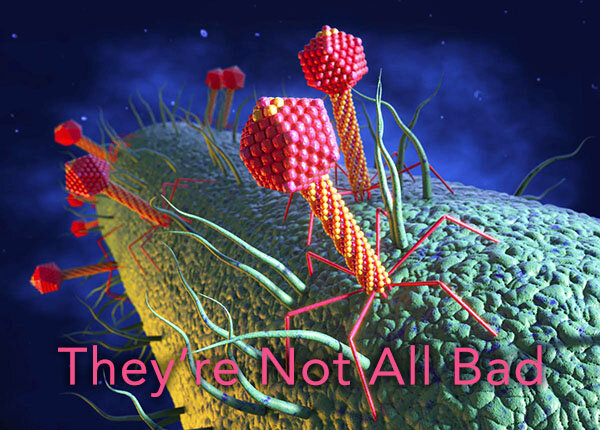
Bacteriophages attacking bacteria ©SPL/Science Source
They're Not All Bad: Good Viruses and Bad Bacteria
These days viruses have gotten a bad rap, and understandably so. Meanwhile, bacteria gets a lot of accolades. There are countless news stories about good bacteria in your gut and yogurt.
But, you might be surprised to learn that certain viruses can be used to cure people, And not in the form of a vaccine.
First, what are some differences between viruses and bacteria?
Bacteria are considered living organisms. Viruses are not.
Viruses can range from 10 - 100 times smaller than bacteria. Thus, viruses could pass through water filters that would stop bacteria.
Gallery of Stock Photos & Illustration of Viruses and Bacteria
Bacteria produce independently, while viruses need a host. Viruses hijack a host's cells by injecting their RNA into their cells. The infected cells become virus factories. Eventually, an overwhelming number of virions are replicated, bursting through the cells' walls and spreading throughout the host’s body.
Unchecked, a virus can disrupt a host for the rest of its' life or even kill it.
Sounds grim until you know about bacteriophage viruses that can kill life-threatening antibiotic-resistant bacteria and other bacterial infections. This treatment is called phage therapy. It's been around for over a hundred years.
The first recorded use was in 1921 by Felix d'Herelle, a microbiologist at the Institut Pasteur in Paris. He administered a single dose of phage therapy to a 12-year-old boy with severe dysentery. In a few days, it had completely cured.
With the invention of antibiotics, phage therapy fell out of use. But, in the 1980s there were a growing number of antibiotic-resistant bacterial strains causing life-threatening infections. Doctors looked to the past for help.
Successful studies have been done on chronic leg ulcers, ear infections, e. coli, and more.
And bacteriophages are readily available in nature. In 2016, at Yale University, an 80-year-old man with a life-threatening bacteria chest infection was helped with bacteriophages from a local pond.
With further research and development, phage therapy might someday be used in place of the side effects of heavy antibiotics.
So the next time you think all viruses are bad, think again!
Watch Science Come Alive Through Chemistry!
Whether you are homeschooling kids for quarantine or not, watching chemistry experiments pop, fizz, and explode is a fun and fascinating distraction. You may also learn something along the way.

Nitrocellulose explosion, high-speed
Some of these experiments can be tried at home, and others are best viewed from the safety of your computer.
Video & Photo Gallery of Science Experiments
Chemistry experiments to try at home:
Frying an egg to see the process of denaturation of protein,
Mixing an acid such as vinegar with baking soda to watch it fizz,
Rubbing a balloon on wool to create static electricity,
Dropping food coloring into a cup to learn about convection currents
Floating a paperclip on water to see surface tension
Iron filings showing the patterns created by a magnet.
Others that are best watched from your computer:
Aluminum and iodine catching fire
Potassium smoking when dropped in water
A nitrogen Triiodide Explosion
"Barking Dog" gas explosions
Combustion of iron wool
Vacuum decompression of marshmallows
Burning Boric Acid
This gallery is a small sample of the many chemical and physics experiments you'll find in our collection. Plus, all our stock science images have detailed and accurate caption information.
Feel free to search our vast and informative library. Let us help you teach your kids while homeschooling or help independent research with the perfect stock royalty free or rights managed video or photo for your next digital or print project.
Also, contact us for details about our new subscription pricing plan.
And of course, enjoy Science Comes Alive!
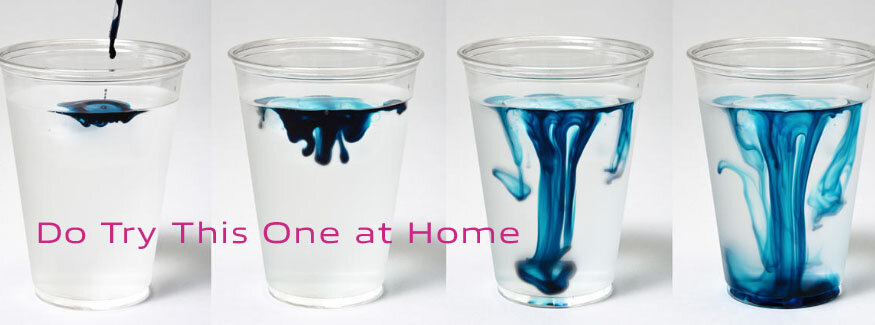
Teaching about Convection Currents Using Food Coloring in Water