
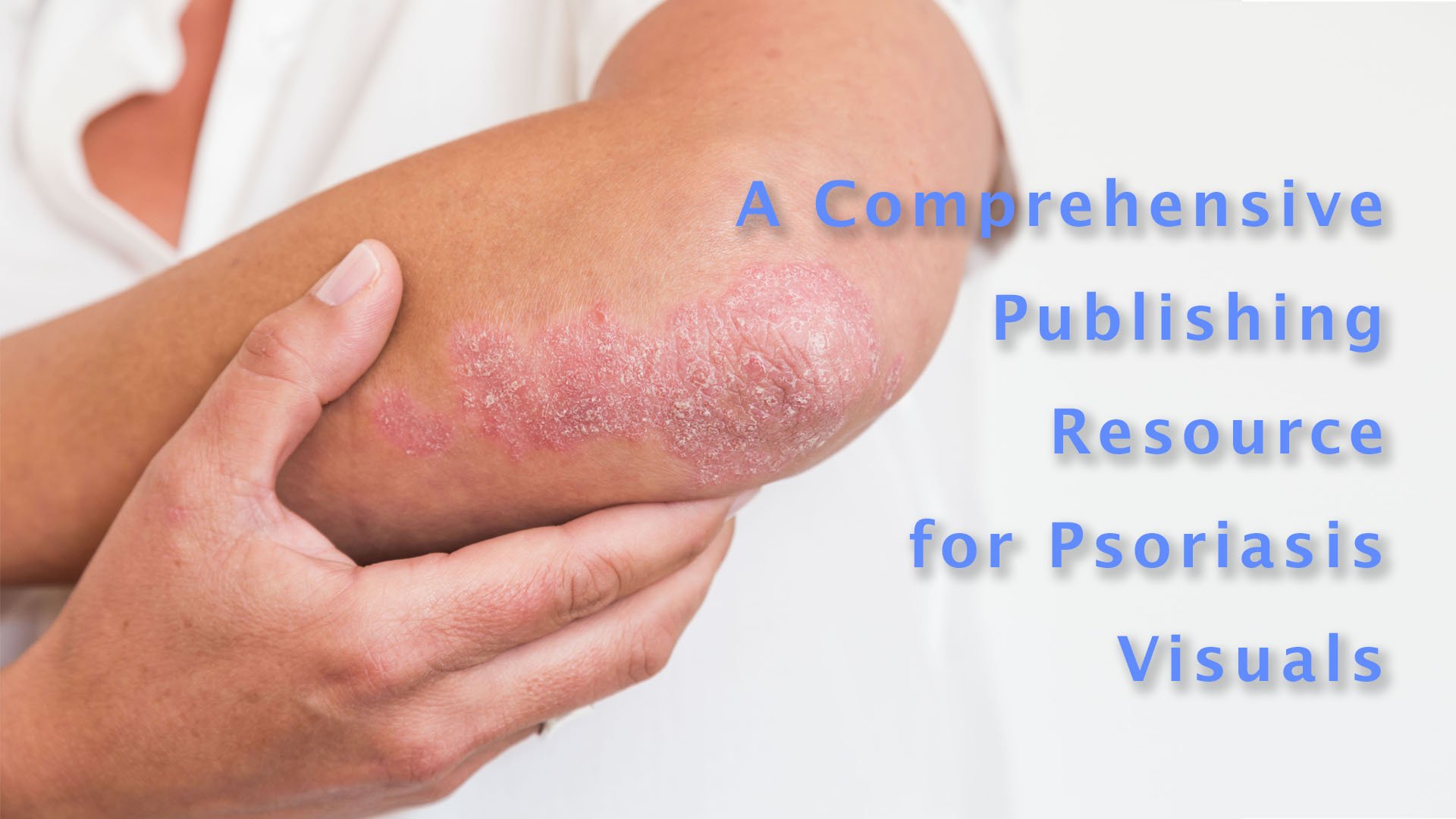
For more than 2,500 years, physicians have been trying to understand psoriasis. Ancient Egyptian medical texts described skin conditions that may have been psoriasis. Greek physicians later gave the disease its name, derived from psora, meaning itch. For centuries, psoriasis was confused with other skin disorders, including leprosy, reflecting just how little was known about the condition.
Today, psoriasis is recognized as a chronic immune mediated disease that affects an estimated 125 million people worldwide. Yet despite its prevalence, psoriasis remains widely misunderstood. It is often dismissed as a cosmetic issue when, in reality, it can affect multiple body systems, impact mental health, and significantly reduce quality of life.
As awareness grows and treatment options continue to expand, publishers, healthcare communicators, educators, and pharmaceutical companies need visual content that accurately reflects the many faces of psoriasis. A single image cannot tell the whole story.
What Is Psoriasis?
Psoriasis is a chronic autoimmune disease that causes the immune system to mistakenly accelerate skin cell production. Instead of shedding and renewing over the course of several weeks, skin cells accumulate in just a few days, creating thickened areas of inflamed skin known as plaques.
The condition is not contagious and can affect people of all ages, genders, and ethnic backgrounds.
There are five major forms of psoriasis, each with a distinct appearance:
Plaque psoriasis: The most common form, characterized by raised, scaly patches that often appear on the elbows, knees, scalp, and lower back.
Guttate psoriasis: Small, drop shaped lesions that frequently develop after infections such as strep throat.
Inverse psoriasis: Smooth, inflamed patches found in skin folds, including the underarms and groin.
Pustular psoriasis: White pustules surrounded by reddened skin.
Erythrodermic psoriasis: A rare but serious form that can affect large areas of the body and may require urgent medical care.
Psoriasis typically follows a cycle of flare ups and periods of remission. Symptoms may improve for months or even years before returning.
The disease also extends beyond the skin. Up to 30 percent of people with psoriasis develop psoriatic arthritis, an inflammatory joint condition that can cause pain, stiffness, swelling, and long term joint damage. For many patients, psoriasis is a systemic disease rather than simply a skin disorder.
Psoriasis Clinical Photography and Medical Illustration
Psoriasis in Context: Who Gets It and Why It’s Undercovered
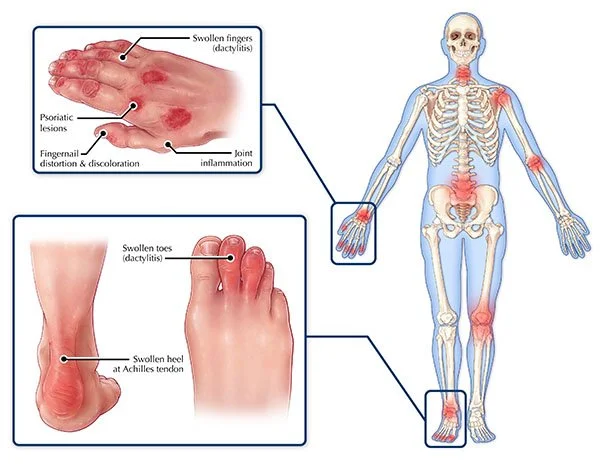
Psoriatic arthritis affects far more than the skin. This illustration shows characteristic symptoms, including joint inflammation, nail changes, and dactylitis — the distinctive finger and toe swelling that signals the disease has moved beyond the surface symptoms. © Evan Oto / Science Source
Psoriasis affects an estimated 125 million people worldwide, including about 8 million people in the United States. While it can develop at any age, it is most often diagnosed during two peak periods, in a person’s 20s and again in their 50s.
Despite its prevalence, psoriasis has historically been underrepresented in medical media and educational imagery. Stigma surrounding visible skin conditions can make patients less likely to participate in photography and awareness campaigns. Dermatology photography has also long lacked representation across diverse skin tones, even though psoriasis may appear quite differently on darker skin, often presenting as violet, gray, or brown rather than red.
As publishers, healthcare organizations, and advocacy groups work to address these gaps, demand is growing for more accurate, inclusive, and compassionate visual representation. Better imagery not only reflects the diversity of patients living with psoriasis, it also supports improved education, awareness, and diagnosis.
A New Era of Psoriasis Treatment
The treatment landscape for psoriasis has changed dramatically over the past two decades.
Traditional therapies such as topical corticosteroids, moisturizers, phototherapy, and systemic medications continue to play important roles in treatment. However, advances in immunology have transformed care for many patients with moderate to severe disease.
Biologic therapies have been particularly significant. These injectable medications target specific components of the immune system, including TNF alpha, IL 17, and IL 23 pathways. By focusing on precise immune mechanisms, biologics can dramatically reduce symptoms while improving long term disease management.
Newer oral medications, including JAK inhibitors and other targeted therapies, are providing additional options for patients, especially those with psoriatic arthritis.
For healthcare communicators, this rapid pace of innovation creates a constant need for current, scientifically accurate visual content.
Why Accurate Psoriasis Imagery Matters
Psoriasis presents unique challenges for publishers because there is no single image that represents the condition.
A patient education brochure, a dermatology textbook, a pharmaceutical marketing campaign, and a clinical journal article may all require very different visual approaches.
Skin Tone Representation
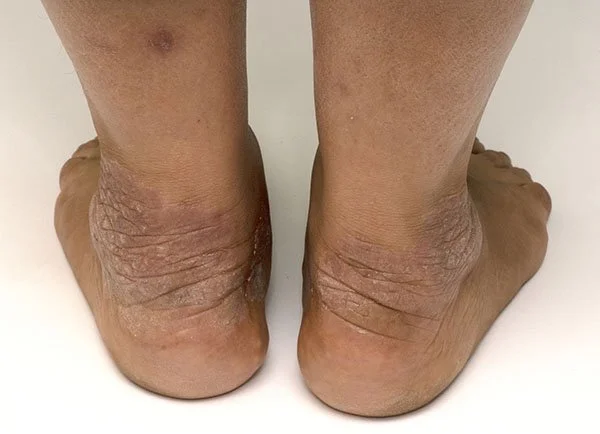
Psoriasis on the ankles of an adult patient. On deeper skin tones, psoriasis may appear violet or brown rather than red — a distinction that makes diverse clinical photography essential for accurate medical education. © SPL / Science Source
Psoriasis can appear differently depending on skin tone. While inflammation often appears red on lighter skin, it may appear violet, gray, brown, or darker than the surrounding skin in people with more melanin. Diverse clinical photography helps ensure that educational materials accurately reflect real patient populations.
Disease Severity
The visual appearance of mild psoriasis differs dramatically from severe disease. Publishers often need imagery spanning a broad spectrum of presentations, from localized plaques to extensive body involvement.
Body Location
Psoriasis affects many areas of the body, including the scalp, nails, hands, feet, face, and skin folds. Different locations create different visual and educational needs.
Psoriatic Arthritis
As awareness grows regarding the systemic nature of psoriasis, demand is increasing for imagery that illustrates joint involvement. Clinical photographs, diagnostic imaging, and anatomical illustrations help tell a more complete story of the disease.
Psoriatic Arthritis Photography and Medical Illustrations
Medical Illustration
Photography alone cannot explain the complex immune processes underlying psoriasis. Medical illustrations remain essential for textbooks, patient education materials, pharmaceutical communications, and scientific publications. Cross sections of skin, immune pathway diagrams, and treatment mechanism illustrations help make complex concepts accessible.
Historical Context
For academic publishing, long form journalism, and documentary projects, historical medical illustrations and archival photography provide valuable context. These materials help trace how understanding and treatment of psoriasis have evolved over time.
A Comprehensive Resource for Psoriasis Visuals
Science Source offers a broad collection of psoriasis and psoriatic arthritis imagery for healthcare, educational, and publishing projects. The collection includes clinical photography across a range of disease severities, body locations, skin tones, and patient demographics, along with diagnostic imaging, medical illustrations, and historical artwork. From patient education materials and clinical journals to pharmaceutical communications and medical textbooks, these visuals help accurately represent the many ways psoriasis affects the body. Science Source provides the depth, diversity, and scientific accuracy needed to tell a more complete story of this complex disease.
Severe Psoriasis: Clinical Image Gallery — These images are intended for medical, educational, and publishing use and depict significant disease progression