
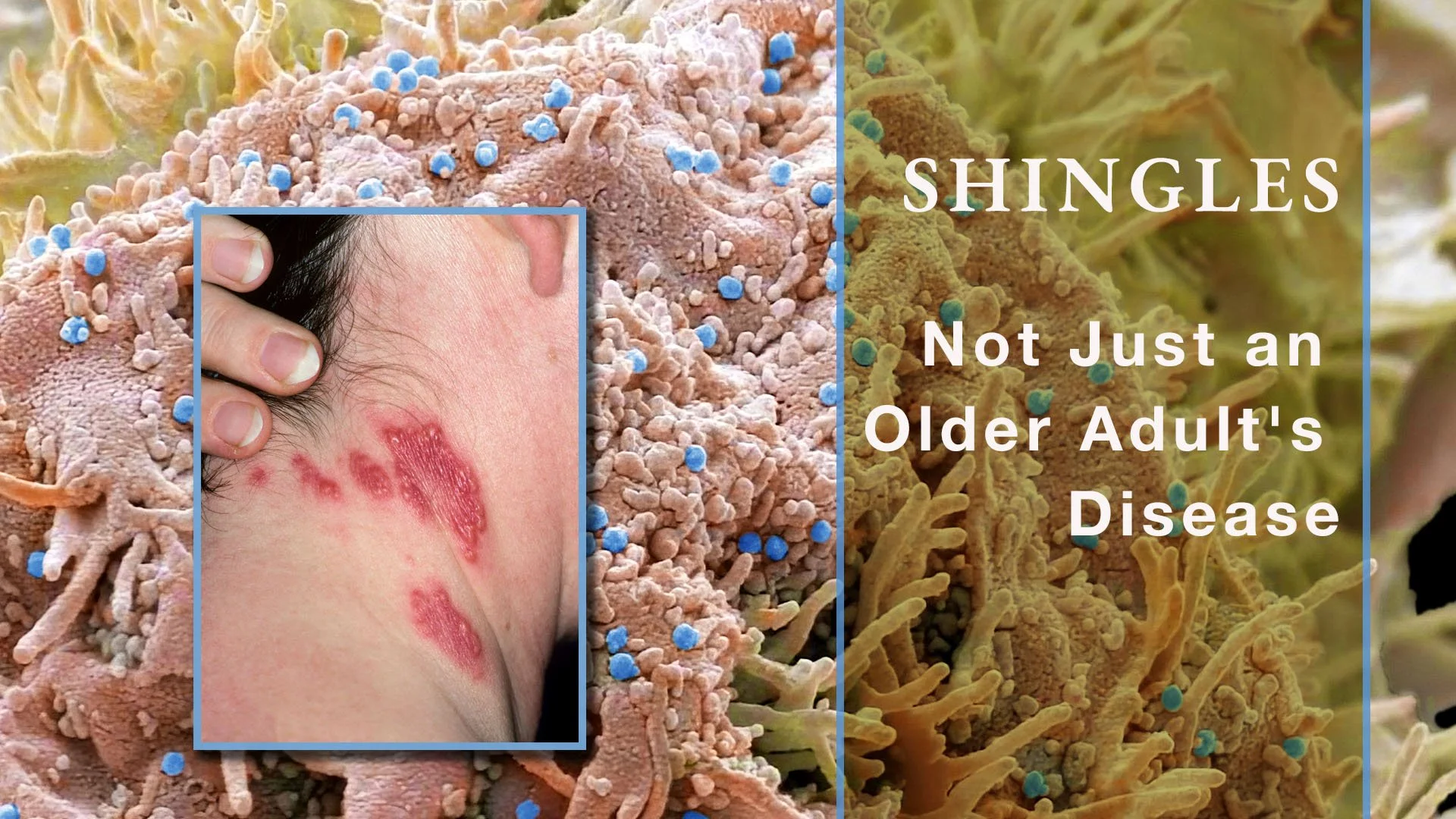
We still don't know exactly what triggers a shingles outbreak. But researchers are noticing a pattern: a growing number of people in their 30s and 40s are developing shingles, and factors like chronic stress, poor sleep, and earlier-onset diabetes, asthma, and chronic kidney disease may all play a role. Increased use of immunosuppressant drugs and steroids may be contributing as well. So despite effective vaccines existing for both chickenpox and shingles, this remains a strikingly relevant disease for publishers to cover — one whose risk profile is shifting in real time.
View our featured gallery: Shingles & Herpes Zoster →
An Old Virus, Reawakened
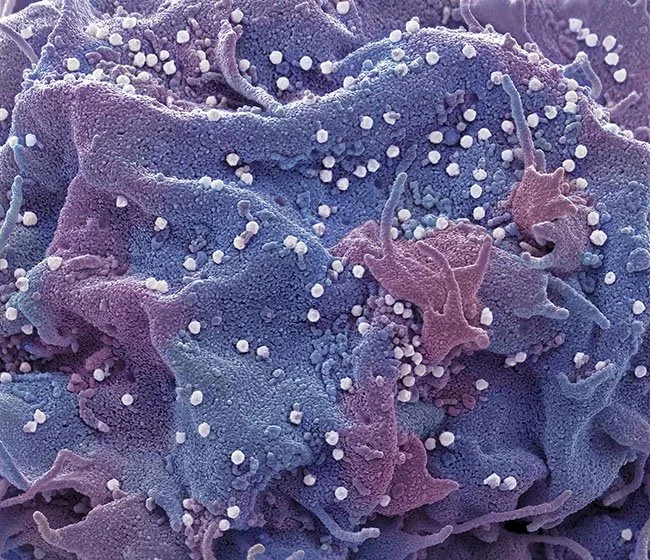
Varicella zoster virus. © Steve Gschmeissner / Science Source
Shingles is caused by the varicella-zoster virus, the same virus responsible for chickenpox. After a childhood chickenpox infection resolves, the virus doesn't leave the body. Instead, it retreats into nerve tissue near the spinal cord and brain, where it can lie dormant for decades before reactivating later in life as shingles.
Here's a detail that surprises a lot of people: you can't catch shingles from someone who has it. What you can catch, if you've never had chickenpox or been vaccinated against it, is chickenpox itself, from direct contact with an active shingles rash. It's the same virus wearing two very different faces, depending on whether it's a first infection or a reactivation.
What Shingles Actually Looks Like
Shingles typically announces itself before any rash appears: burning, tingling, or aching pain along one side of the body, often mistaken for a pulled muscle or pinched nerve. Within a few days, a band of painful blisters usually follows, generally confined to one side of the body and tracing the path of a single affected nerve (a pattern called a dermatomal distribution, one of the more visually distinctive presentations in dermatology).
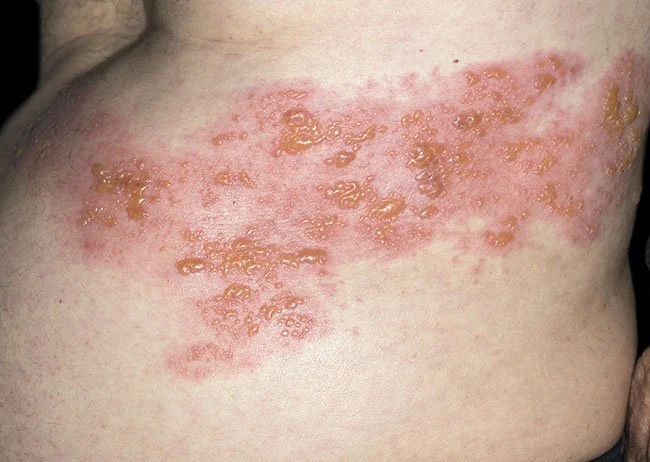
Shingles, or herpes zoster, rash on a patient's torso. © Dr. Harout Tanielan / Science Source
For some patients, the pain doesn't fully resolve even after the rash clears, a lingering condition called postherpetic neuralgia that can persist for months. It's a big part of why shingles is taken seriously as more than just a temporary rash.
A Shifting Risk Profile
Age has always been the dominant risk factor for shingles; the older the patient, the higher the risk, generally attributed to a natural decline in immune function over time. But that picture has been getting more complicated. Cases among people in their 30s and 40s have been rising for at least the past two decades, and researchers have started identifying why.
Chronic conditions at younger ages: diabetes, asthma, and chronic kidney disease have each been linked to elevated shingles risk, even in adults well below the traditional risk age.
Stress and sleep disruption: both are associated with immune suppression broadly, and specifically implicated in a number of shingles studies.
Immunosuppressant drugs and steroid use: medications that dampen immune response can also make viral reactivation more likely.
Sex differences — across most age groups, women appear to face higher shingles risk than men, though researchers haven't settled on a single explanation.
Age — still the single strongest risk factor overall, even as younger cases climb.
Taken together, it's less a story about age alone and more a story about anything that quietly wears down immune defenses over time.
The Numbers Behind the Trend
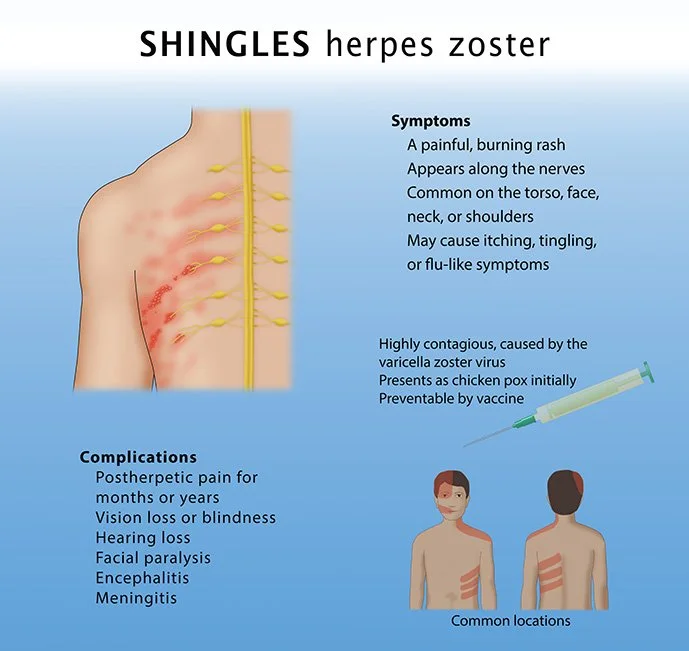
A medical illustration of the shingles virus rash. © Monica Schroeder / Science Source
The scale of this is worth pausing on: roughly 1 in 3 unvaccinated people will develop shingles in their lifetime. That's a substantial figure for a disease many people still associate almost exclusively with older age.
Vaccines exist for both chickenpox and shingles, and most physicians recommend vaccination as the primary tool for reducing risk — a point worth noting for context, though decisions about vaccination are naturally between a patient and their physician. From a publishing standpoint, shingles is still evolving in who it affects, which keeps it relevant well beyond any single demographic.
A Disease With Two Very Different Faces
Part of what makes shingles compelling to illustrate is the contrast between its visible and invisible sides. In its active phase, it's one of the most visually distinctive conditions in dermatology; a clearly bordered band of blisters, often dramatic in appearance, confined to one side of the body. But its cause is entirely invisible to the eye: a virus reactivating deep within nerve tissue, nowhere near the skin where the rash eventually appears. Few conditions offer quite this contrast between a hidden mechanism and such an unmistakable physical presentation.
A Story Best Told With the Right Imagery
That contrast is exactly why strong imagery matters here — readers need to see both sides of the story: the dramatic, recognizable rash and the underlying viral mechanism they'd otherwise never picture.
Our collection covers both extensively, from patient photography spanning mild to severe presentations to detailed micrographs of the virus itself, backed by accurate metadata and more than sixty years of experience helping editors and picture researchers find exactly what a piece needs — at no charge, as part of the research support we offer every client.