
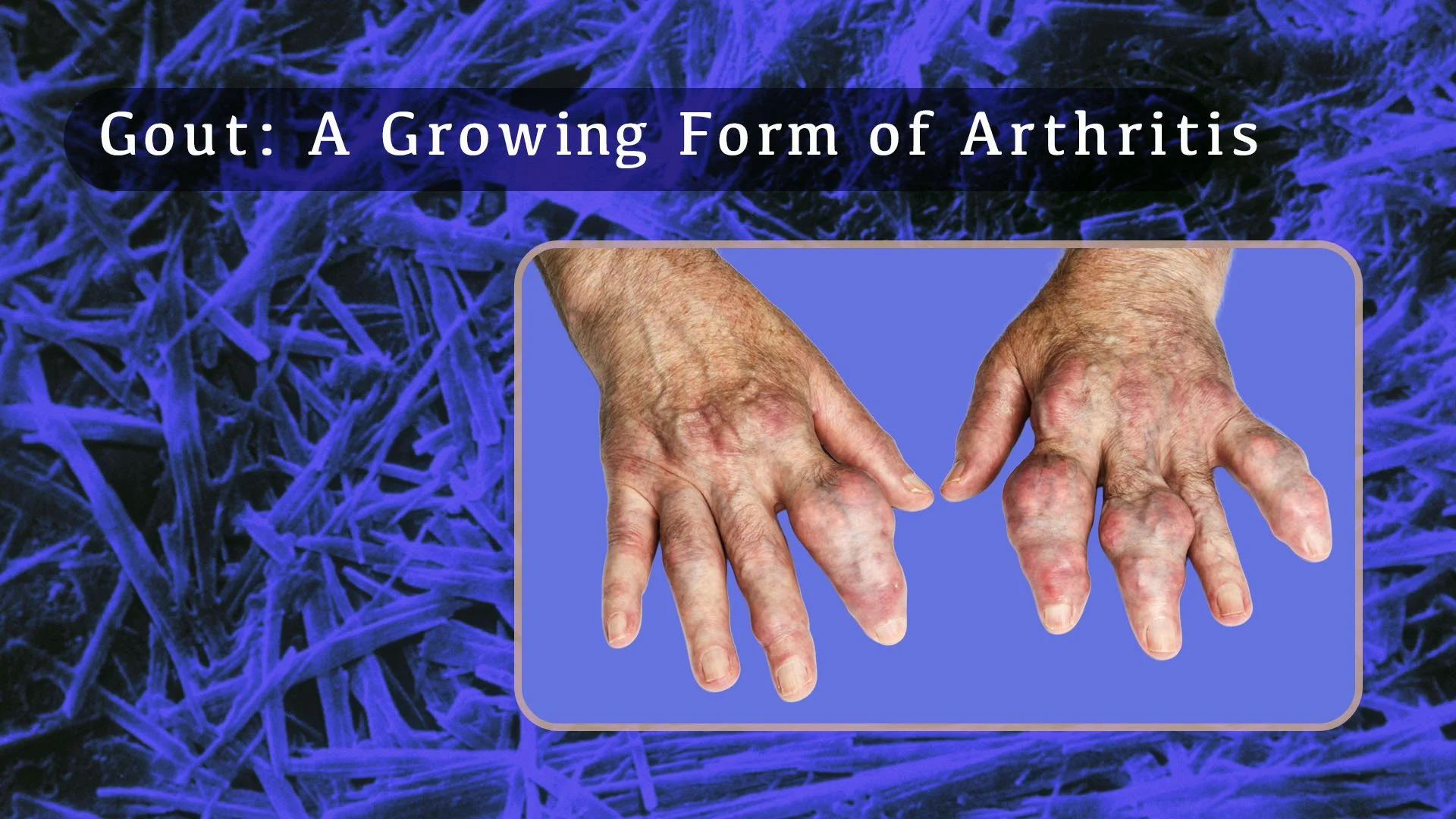
Gout is the most common inflammatory form of arthritis worldwide, and its prevalence has been climbing steadily for decades — global cases have risen by more than 20% since 1990, and researchers project the number of people affected will approach 100 million by 2050. It has a reputation as an old-fashioned, almost historical disease (it's been nicknamed "the disease of kings" for centuries, thanks to its long association with rich food and drink), but it's very much a present-day phenomenon. Attacks tend to strike suddenly, often overnight, with intense pain and swelling most commonly in the big toe. The cause, as it turns out, is a strikingly visual one: sharp, needle-shaped crystals forming directly inside the joint.
Featured gallery: Gout Inflammatory Arthritis →
A Crystal Problem, Not Just a Chemistry Problem
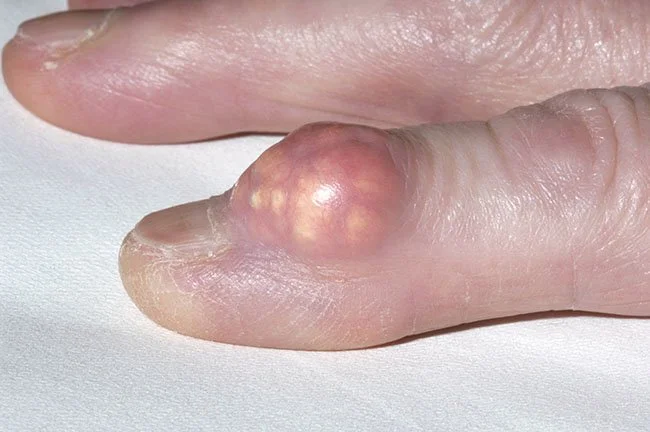
Gout tophus swelling on a woman’s finger. © Dr P. Marazzi / Science Source
Gout begins with uric acid — a waste product the body normally processes through the kidneys and excretes in urine. When uric acid builds up in the bloodstream faster than the kidneys can clear it, a condition called hyperuricemia, it can begin to form monosodium urate crystals within joints. Those crystals are what actually trigger a gout attack: the immune system recognizes them as foreign material and mounts an inflammatory response, producing the sudden pain and swelling gout is known for.
A fun fact worth knowing: those urate crystals are distinctly needle-shaped, and under polarized light microscopy they're not just visible but genuinely striking to look at — sharp, birefringent needles that shift color depending on their orientation to the light. Gout is one of the few joint diseases that can be diagnosed by identifying its literal cause under a microscope.
It's also worth noting why the big toe is so often the first joint affected. Urate crystals form more readily at lower temperatures, and the big toe — being farther from the body's core and closer to the skin's surface — tends to run slightly cooler than most other joints, making it a preferred site for crystal formation.
What a Gout Attack Actually Looks Like
A gout attack, or flare, tends to announce itself abruptly, frequently waking someone in the middle of the night with intense pain in the affected joint. The joint typically becomes swollen, red, and hot to the touch, sometimes sensitive enough that even the weight of a bedsheet is uncomfortable.
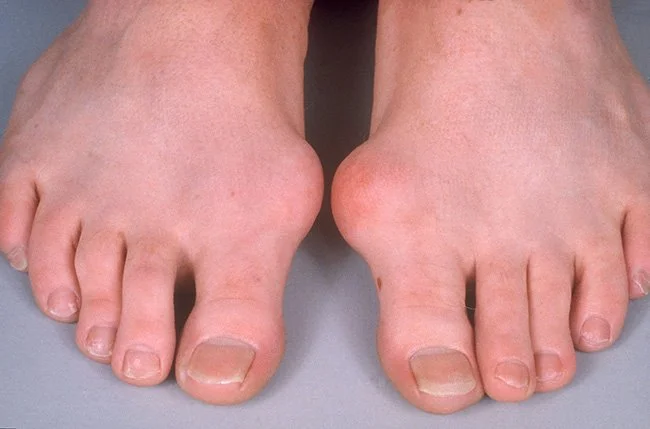
Gout swelling in big toes. © Biophoto Associates / Science Source
While the big toe is the classic presentation, gout can affect other joints as well, including the ankles, knees, and hands — and involvement in the hands, in particular, can meaningfully limit fine motor tasks during a flare. Early in the disease, attacks tend to resolve on their own within days to a couple of weeks. Left unmanaged, however, flares tend to become more frequent and longer-lasting over time, and repeated attacks can eventually lead to visible deposits of urate crystals under the skin, known as tophi.
Who's Most at Risk?
Several factors influence uric acid levels and, in turn, gout risk:
Diet — purine-rich foods such as anchovies, sardines, and tuna, along with beer and fructose-sweetened beverages, can raise uric acid levels.
Obesity — associated with both higher uric acid production and reduced excretion.
Hypertension, diabetes, kidney disease, and heart disease — all frequently co-occur with gout, and each can independently affect uric acid handling.
Certain medications — including some diuretics and beta-blockers, which can raise uric acid levels as a side effect.
Demographics — gout disproportionately affects middle-aged men and postmenopausal women, likely related to the uric-acid-lowering effect of estrogen, which declines after menopause.
A Disease You Can Actually See
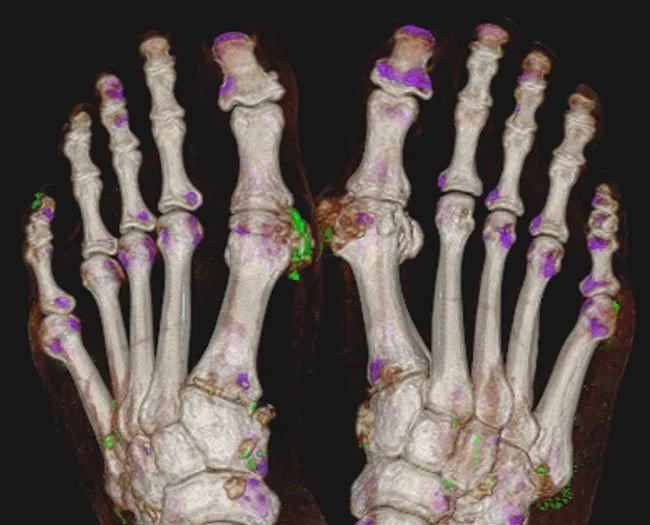
Gout in the feet, 3D CT scan. © Steven Needell / Science Source
Compared to many chronic diseases, gout has an unusually direct visual signature. The crystals themselves are visible under the microscope. During a flare-up, the inflamed joint is visibly swollen and discolored. Advanced cases produce visible tophi. Few conditions offer this much to work with visually, from the molecular cause to the physical presentation.
A Story Best Told With the Right Imagery
This visual range is exactly what makes gout such a compelling subject to illustrate — crystal micrographs, joint imaging, and patient photography can each tell a different part of the same story, from cause to consequence.
Our collection spans it all, backed by accurate metadata and more than sixty years of experience helping editors and picture researchers find exactly the piece they need. This is all part of the research services we offer every client.