
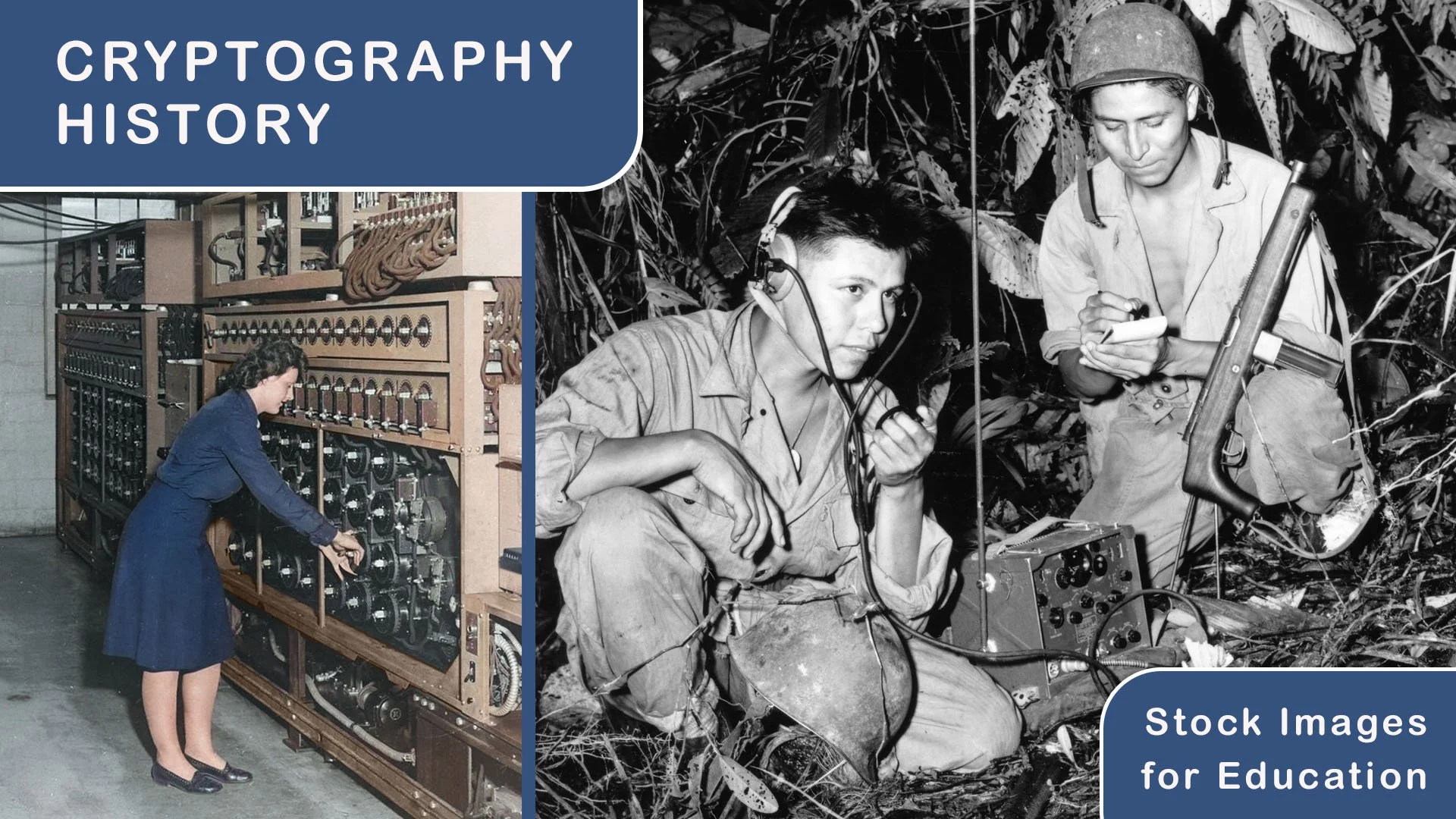
Cryptography has always advanced as an arms race: every new cipher invites a method to break it. One of the most effective World War II systems used the Navajo word besh-lo, “iron fish,” for submarine. It was never broken.
Ancient and Renaissance Ciphers: How Cryptography Began
The earliest ciphers were substitution systems. The Greek Polybius square, dating to the 2nd century BCE, replaced each letter with a pair of numbers, and the Caesar cipher shifted each letter a fixed number of places. Both ciphers were broken by a method first described by the 9th-century scholar Al-Kindi: frequency analysis, which counts how often each symbol appears and matches the pattern to the underlying language.
Renaissance cryptographers responded with polyalphabetic ciphers, which use several substitution alphabets to flatten those frequencies. Leon Battista Alberti described an early version around 1467, built around a rotating cipher disk. The Vigenère cipher is named after Blaise de Vigenère, though Giovan Battista Bellaso described it earlier. It resisted general attack until the 19th century.
Gallery of Cryptography Stock Images for Educational Use
Enigma, Bletchley Park, and Alan Turing
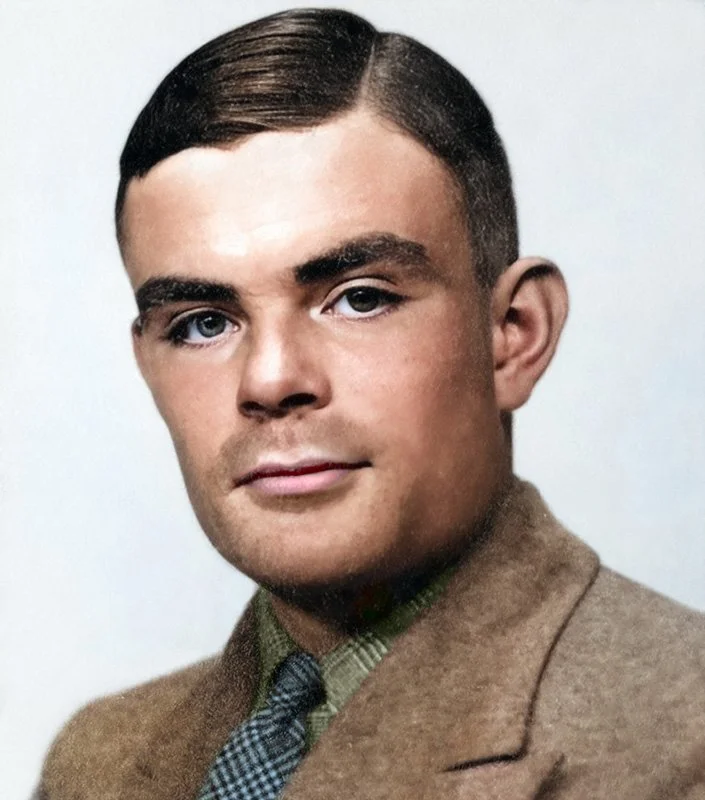
Alan Turing, English mathematician. Credit Science Source
By the 1920s, rotor machines had automated polyalphabetic encryption. In the Enigma machine, each keystroke sent current through rotors that shifted with every letter, creating an enormous number of possible settings. Polish mathematicians Marian Rejewski, Jerzy Różycki, and Henryk Zygalski broke the German military Enigma in 1932 and shared their methods with British and French counterparts in 1939.
At Bletchley Park, Alan Turing and his colleagues built on that work, designing the electromechanical Bombe to find the daily Enigma settings. A separate machine, Colossus, built by engineer Tommy Flowers, was used against a different German cipher, the Lorenz.
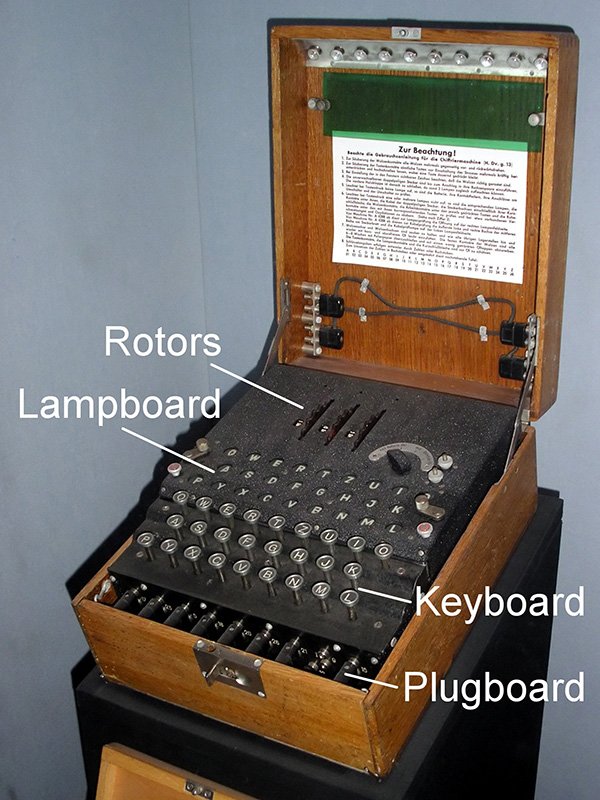
Enigma machine. Credit Science Source
The Navajo Code Talkers: Cryptography Without a Machine
Not every effective system relied on machinery. Choctaw soldiers used their own language to relay messages in World War I, in what is generally regarded as the first use of Native American code talkers. In 1942, the U.S. Marine Corps recruited Navajo speakers and built a code on their language, with a coded vocabulary for military terms. The code was never broken, remained classified until 1968, and the original code talkers received the Congressional Gold Medal in 2001.
The distinction is useful for teaching. Enigma scrambled letters mechanically; the Navajo code replaced words and meanings, relying on a language few outsiders spoke.
Why Cryptography History Images Matter for Publishers
Publishers covering World War II, mathematics, computer science, or the history of technology need imagery that shows the actual machines, people, and documents, not generic digital-code graphics. Enigma, the Bombe, and the Lorenz machine look quite different from one another, and accurate identification matters in captions.
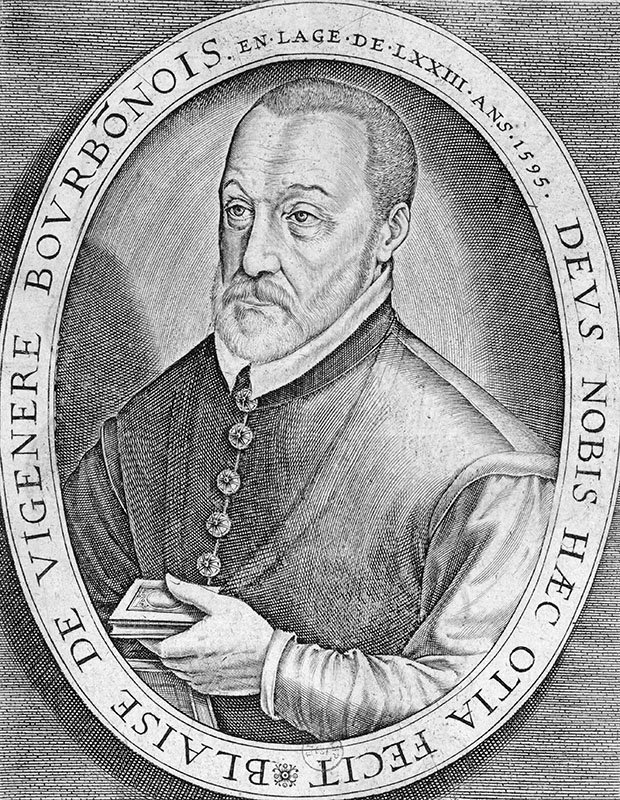
Blaise de Vigenère, French Cryptographer, Cipher Creator. Credit Science Source
Cryptography History Images from Science Source
Our collection covers the full arc: illustrations of the Caesar cipher, Polybius square, and Alberti cipher disk; a portrait of Blaise de Vigenère; patent drawings and photographs of Enigma and other cipher machines; the Bombe, Colossus, and Lorenz machines at Bletchley Park; American cryptanalysts including William and Elizebeth Friedman; and photographs of the Choctaw and Navajo Code Talkers. We also hold several in-house colorized photographs of Alan Turing and other hand-colorized cryptography images unique to Science Source.